

The Mystery of Stonehenge: Ritual Site or Ancient Calendar?
Discuss the possible purposes of Stonehenge, including theories about its use as an astronomical calendar or a ritual site.
 Sly Puzzle Games
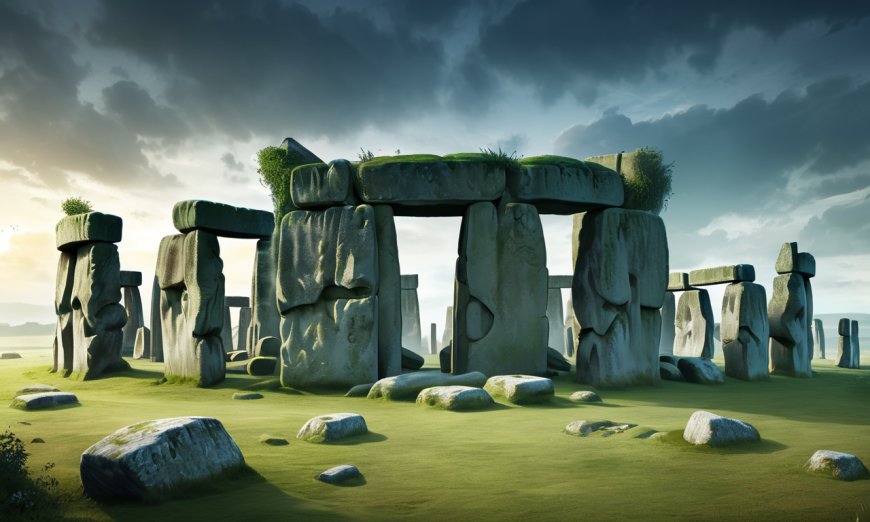


Stonehenge, one of the most iconic and enigmatic monuments in the world, has fascinated historians, archaeologists, and visitors for centuries. Located on Salisbury Plain in England, this prehistoric structure has sparked numerous theories about its purpose and construction. Was it an ancient astronomical calendar, a ritual site, or something else entirely? Let’s explore the mysteries of Stonehenge.
Historical Background
Stonehenge was built in several stages, beginning around 3000 BCE, during the Neolithic period. The monument consists of a circular arrangement of massive standing stones, some weighing up to 25 tons. The stones were transported from distant locations, including the Preseli Hills in Wales, over 150 miles away.
Theories About Its Purpose
- Astronomical Calendar
One of the most popular theories is that Stonehenge served as an ancient astronomical calendar. The alignment of the stones with the solstices and equinoxes suggests that the site was used to mark important celestial events. For instance, during the summer solstice, the sun rises directly over the Heel Stone, casting its first rays into the heart of Stonehenge.
Interesting Fact: The precise alignment of Stonehenge with the solar and lunar cycles indicates that its builders had a sophisticated understanding of astronomy.
- Ritualistic and Ceremonial Site
Another widely accepted theory is that Stonehenge was a site for rituals and ceremonies. The monument’s construction and layout suggest it was a place of great spiritual significance. Archaeological findings, such as human remains and artifacts, indicate that it may have been used for burials and other ceremonial purposes.
Fascinating Insight: The nearby Durrington Walls, another Neolithic site, shows evidence of large feasting events, suggesting that Stonehenge could have been part of a larger complex of ritual sites.
- Healing Center
Some researchers believe that Stonehenge was a place of healing. The bluestones used in its construction were thought to have mystical properties. This theory is supported by the discovery of skeletons with signs of injury and disease buried near the site, suggesting that people traveled to Stonehenge seeking cures.
- Social Gathering Place
Another hypothesis is that Stonehenge was a social gathering place where people from different regions came together. The monument could have served as a unifying structure, fostering a sense of community and shared identity among the Neolithic people.
Evidence and Skepticism
While these theories are compelling, definitive evidence about Stonehenge’s exact purpose remains elusive. The monument’s construction spans several centuries, and its use might have evolved over time. Additionally, the lack of written records from the period means that much of what we know is based on archaeological interpretation and educated guesses.
Preservation and Significance
Today, Stonehenge is a UNESCO World Heritage site and attracts visitors from around the globe. Efforts are ongoing to preserve the monument and its surrounding landscape, ensuring that future generations can continue to explore its mysteries.
A Little Fun Fact
Oh, and by the way, did you know that Stonehenge has a modern-day connection to pop culture? Every year, thousands of people gather at the site to celebrate the summer solstice, continuing a tradition that dates back thousands of years.
Conclusion
Stonehenge remains one of the world’s most captivating archaeological sites. Whether it was an astronomical calendar, a ritual site, or a place of healing, it stands as a testament to the ingenuity and spiritual life of our Neolithic ancestors.
And if you love exploring ancient mysteries and solving puzzles, don’t forget to check out our word puzzle game, Sly Puzzle Games. It's a great way to keep your brain sharp and entertained. Happy exploring!