

Why Some Believe the Earth Is Hollow and Inhabited by Advanced Beings
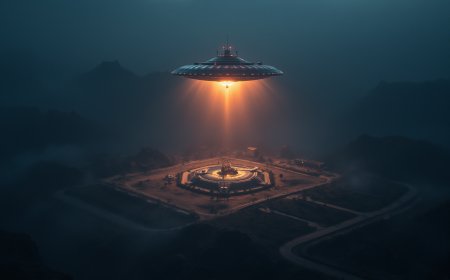
The idea that our planet is not a solid sphere but a hollow shell with entire civilizations thriving within it might sound like pure science fiction. However, the Hollow Earth theory has intrigued explorers, mystics, and conspiracy theorists for centuries. From mythical kingdoms to advanced alien beings living beneath our feet, this theory has inspired everything from literature to pseudoscientific speculation. Is there any truth to the notion of a Hollow Earth, or is it simply a relic of imagination and myth? Let’s dig into the history, evidence, and theories surrounding this enigmatic concept.
 Sly Puzzle Games


The Origins of the Hollow Earth Theory
1. Ancient Mythology
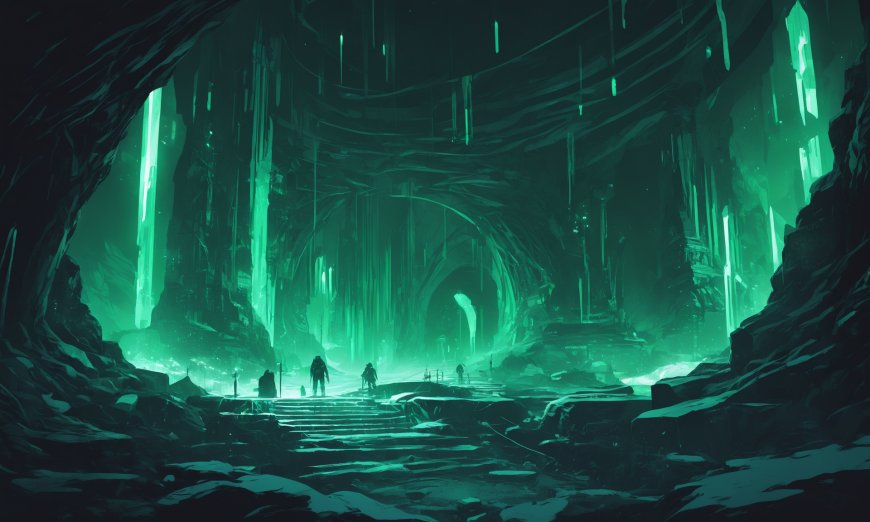
The concept of a world beneath the surface is deeply rooted in global mythology. Many cultures have stories of subterranean realms:
- Agartha (Tibet and India): A mystical city said to be located within the Earth, ruled by spiritually advanced beings.
- Hades (Greek mythology): The underworld where souls reside after death.
- Shambhala (Buddhist tradition): Sometimes associated with a hidden inner-Earth paradise.
These myths often describe advanced knowledge, powerful entities, and hidden treasures beneath the surface.
2. Scientific Beginnings
The modern Hollow Earth theory emerged in the 17th century with Edmond Halley, the astronomer best known for Halley’s Comet. Halley proposed that the Earth might consist of concentric spheres separated by vast hollow spaces. He suggested that these hollow regions could support life and might even emit auroras visible from the surface.
3. John Cleves Symmes’ Expedition
In the 19th century, John Cleves Symmes Jr., an American army officer, fervently promoted the idea that the Earth was hollow and accessible through large holes at the North and South Poles. Symmes even lobbied Congress for funding to explore these entrances.
The Hollow Earth Hypothesis
According to proponents of the Hollow Earth theory:
-
Structure of the Earth:
- The planet consists of an outer crust and a vast, hollow interior.
- The interior has its own sun or luminous core, providing light and heat.
-
Entrances to the Inner World:
- Large openings at the poles lead to the inner Earth.
- These entrances are allegedly hidden or obscured by governments and scientific institutions.
-
Inhabitants:
- The inner Earth is said to be home to advanced beings, ranging from enlightened human civilizations to extraterrestrial species.
- Some claim these beings possess superior technology and have influenced surface civilizations.
Alleged Evidence for a Hollow Earth
1. Polar Anomalies
Advocates often point to unexplained phenomena near the poles as evidence of entrances to the inner Earth:
- Warm Water and Mammoth Bones: Early Arctic explorers reported areas of warm water and strange findings, such as mammoth remains, which some theorists attribute to life emerging from within the Earth.
- Auroras: Halley’s theory suggested that auroras could be caused by light escaping from the Earth’s interior.
2. Satellite Imagery
Conspiracy theorists have claimed that satellite images show unusual, blurry regions near the poles, interpreted as attempts to conceal massive openings.
3. Admiral Richard E. Byrd’s Diary
Admiral Richard E. Byrd, a pioneering polar explorer, allegedly wrote in a secret diary about a 1947 flight where he entered the Hollow Earth through the North Pole. Byrd claimed to have encountered a lush, inner world populated by advanced beings. However, the authenticity of this diary is highly disputed.
Scientific Rebuttals
The Hollow Earth theory is firmly debunked by modern science:
-
Earth’s Structure:
- Seismic studies show that Earth consists of a solid inner core, a liquid outer core, and a mantle beneath the crust.
- These findings are incompatible with a hollow interior.
-
Gravity and Physics:
- A hollow planet would not have sufficient mass to produce the gravitational forces we experience.
- The planet’s stability and magnetic field would also be impossible with a hollow structure.
-
Polar Exploration:
- Extensive exploration of the poles has revealed no evidence of large openings or entrances to an inner world.
Why the Theory Persists
Despite overwhelming scientific evidence to the contrary, the Hollow Earth theory endures due to a combination of factors:
- Mythology and Mysticism: The idea appeals to ancient myths of hidden worlds and advanced beings.
- Distrust of Authority: Conspiracists often claim that governments and scientists are hiding the truth to maintain control.
- Pop Culture Influence: Books, movies, and TV shows have popularized the idea, including works like Journey to the Center of the Earth by Jules Verne and modern sci-fi adaptations.
Interesting Fact
Did you know that the Nazis allegedly sent expeditions to Antarctica in search of Hollow Earth entrances? Some conspiracy theories even claim they established a secret base there, though no credible evidence supports this.
Conclusion
The Hollow Earth theory is a fascinating blend of mythology, pseudoscience, and imagination. While modern science leaves no room for a hollow planet, the idea of hidden realms and advanced civilizations beneath our feet continues to capture the human imagination. Whether as a metaphor for exploration or a lens into our cultural psyche, the Hollow Earth reminds us of our enduring curiosity about the mysteries of the world — and what lies beneath.
What do you think? Is the Hollow Earth just a fantasy, or could there be more to the story?