

The Dark Symbolism in Joker: Political Underpinnings and Social Commentary
Todd Phillips’ Joker (2019) brought a new level of psychological and societal depth to the classic comic book villain, exploring themes of mental illness, social alienation, and systemic oppression. Unlike traditional comic book films, Joker strips away the glamour, focusing instead on Arthur Fleck, a man on the fringes of society whose transformation into the Joker speaks to dark realities. The film’s intense, unfiltered perspective on his descent into chaos struck a chord with audiences, resonating with contemporary social and political issues. What are the hidden messages and political undertones that make Joker more than just a character study?
 Sly Puzzle Games
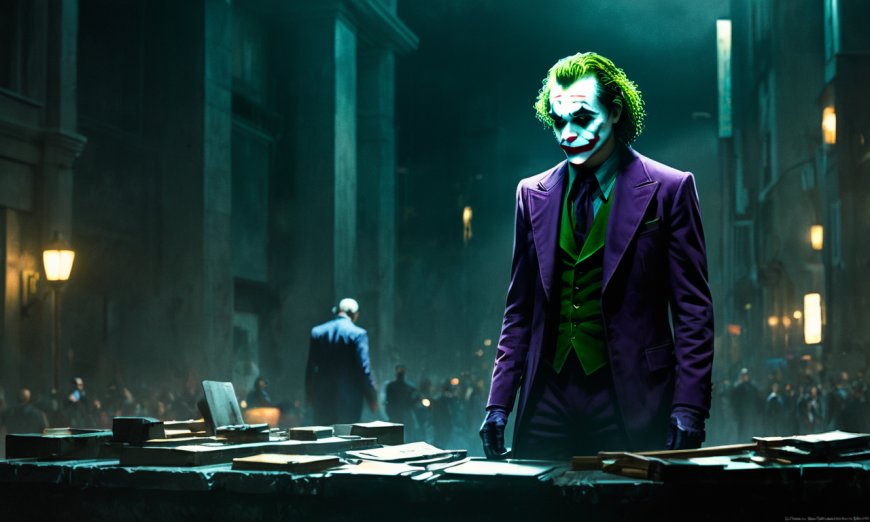


Let’s delve into the powerful themes of Joker, exploring how it reflects the struggles of society, critiques systemic failures, and forces us to confront uncomfortable truths about our world.
1. Mental Health and Society’s Neglect
One of the central themes of Joker is Arthur’s struggle with mental illness and his search for identity in a world that repeatedly marginalizes him. From the beginning, we see that Arthur is a deeply troubled individual, struggling with uncontrollable laughter and taking multiple medications. The cuts to social services that deprive him of psychiatric help reveal society’s neglect of those in need of mental health care. Arthur’s descent is accelerated by his inability to access the therapy and medication he needs, highlighting a grim reality faced by many individuals in marginalized communities.
Through Arthur’s character, Joker emphasizes the consequences of neglecting mental health, not just on an individual level, but as a societal failure. By illustrating how easily Arthur slips through the cracks, Phillips critiques a system that often prioritizes wealth and power over the welfare of its people. The message is clear: when we ignore those in need, society ultimately pays the price.
2. Economic Inequality and Class Division
Set in a decaying Gotham City, Joker paints a vivid picture of a society where wealth disparity is striking. As the rich live comfortably, the working class suffers in poverty, deprived of essential services, and forced into harsh, unforgiving lives. Arthur’s own experiences as a low-paid, struggling individual make him a symbol of the economically disadvantaged, those left to fend for themselves while the wealthy remain indifferent.
The depiction of Gotham’s elite, represented by Thomas Wayne, contrasts sharply with Arthur’s world. Wayne is out of touch with the struggles of the working class, seeing them as a “clown” class rather than people with real needs. This economic divide is the breeding ground for the resentment and rage that ultimately drive Gotham’s lower classes to riot. The film’s portrayal of a society in turmoil due to wealth inequality serves as a mirror to modern issues, pushing viewers to reflect on our own world’s systemic inequities.
3. The Power of Media and Social Perception
Joker also dives into the role of media in shaping public perception. Arthur’s transformation into the Joker begins when his failed stand-up routine is aired on a late-night show hosted by Murray Franklin, who mocks him for laughs. This public humiliation is a turning point for Arthur, pushing him closer to embracing his Joker persona. The media’s treatment of Arthur exemplifies how society often uses the misfortunes of the vulnerable for entertainment, dehumanizing them in the process.
This critique of media extends to our own world, where sensationalism often overshadows empathy, and where ratings sometimes matter more than human decency. Joker asks us to consider the impact of such dehumanization on those who feel rejected or invisible, reminding us that media’s influence is powerful enough to drive people to extremes.
4. The Collapse of Social Support Systems
Throughout Joker, we witness the erosion of social support systems, represented by Arthur’s loss of access to therapy and medication. This gradual withdrawal of resources paints a grim picture of how society deals with its most vulnerable. Arthur’s caseworker, while sympathetic, is blunt about the reality: “They don’t give a sh*t about people like you, Arthur, or people like me, for that matter.” This moment captures the deep frustration of individuals working within failing social institutions.
Arthur’s violent transformation into the Joker can be seen as a metaphor for what can happen when a society abandons those who need it most. Phillips’ message is clear: when support systems collapse, people are left with few options, and the repercussions can be catastrophic. The film is a powerful reminder of the importance of providing support for those in need, lest the consequences of inaction come back to haunt society.
5. Political Rebellion and Class Uprising
Arthur’s descent into madness sparks a larger movement among Gotham’s poor, who see him as a symbol of rebellion against the city’s elite. The Joker mask becomes an icon for the oppressed masses, representing their frustrations and anger toward the wealthy and the power structures that fail them. As Gotham’s streets fill with protesters, the film presents a chilling vision of what happens when society’s most vulnerable finally revolt.
This theme resonates with real-world uprisings, where disenfranchised groups often feel they have no other means to be heard. In Joker, the protests symbolize a tipping point — a moment when years of inequality and oppression lead to open defiance. The film raises questions about the consequences of systemic neglect and whether rebellion is inevitable when society consistently marginalizes large segments of its population.
6. The Ambiguity of Morality and the Making of a Villain
Joker challenges viewers to question their understanding of morality and the nature of villainy. Arthur’s transformation into the Joker is portrayed as a series of traumatic events that strip him of his identity and humanity. While he becomes violent and ultimately dangerous, his journey forces us to confront the factors that create villains in the first place. Is Arthur truly evil, or is he a product of a society that ignored, mocked, and abandoned him?
By presenting Arthur as a sympathetic yet disturbing character, Joker blurs the line between victim and villain. Phillips suggests that individuals do not become “evil” in isolation; they are shaped by their environments and experiences. This moral ambiguity pushes viewers to examine the circumstances that lead to such transformations, urging us to see the human behind the mask.
Interesting Fact
Did you know that Joaquin Phoenix reportedly lost 52 pounds for his role as Arthur Fleck, further enhancing his portrayal of a man physically and mentally pushed to the edge? His physical transformation not only mirrored Arthur’s mental decline but also underscored the character’s isolation, making his performance as the Joker even more haunting.
Conclusion
Joker is more than a film about a comic book villain; it’s a powerful commentary on the struggles of the marginalized, the consequences of neglect, and the dangers of unchecked inequality. By weaving together themes of mental illness, economic disparity, media influence, and social uprising, Joker holds up a mirror to our own world, revealing the systemic failures that drive individuals to desperate acts.
Todd Phillips’ film challenges us to look beyond the mask and question the systems and values that allow people to fall through the cracks. In a society where the boundaries between hero and villain are often blurred, Joker serves as a stark reminder that the true darkness lies not in individuals, but in the environments that shape them.