


Hidden Messages in Inception: What Was Christopher Nolan Really Trying to Say?
Christopher Nolan’s Inception has captured audiences’ imaginations since its release in 2010, not only with its thrilling plot but also with its complex layers and ambiguous ending. The film’s story about a team of specialists who infiltrate dreams to plant ideas raises countless questions about the nature of reality, perception, and control. Fans and theorists alike have debated the deeper meaning behind Inception, wondering if Nolan’s masterpiece is more than just a mind-bending heist film. Could Inception be filled with hidden messages about reality, human consciousness, and perhaps even the power of cinema itself?
 Sly Puzzle Games
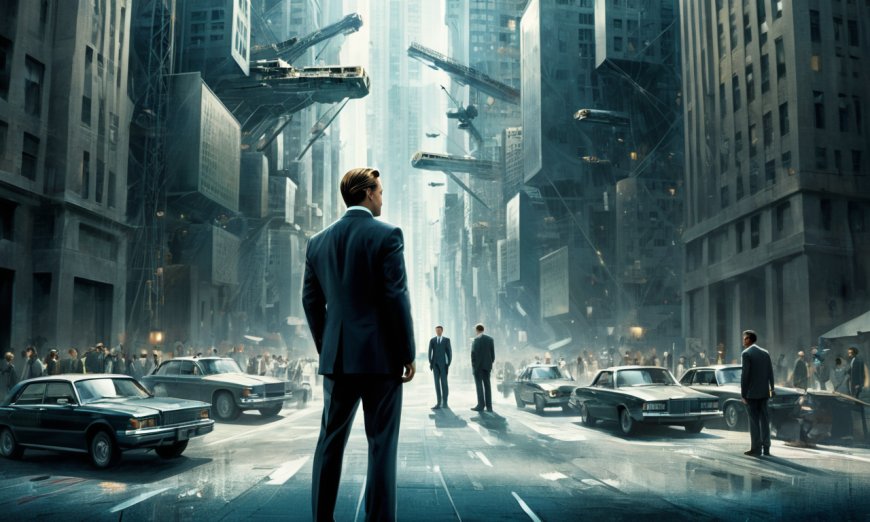


Let’s dive into some of the most intriguing theories about what Inception is really trying to say.
1. The Nature of Reality and the Power of Belief
One of the most discussed themes in Inception is the blurred line between reality and illusion. Throughout the film, Cobb, the protagonist, is haunted by his memories of his late wife, Mal, and the question of whether he is still dreaming. The concept of a “totem,” an object that helps characters discern between dream and reality, underscores this theme, especially with the unresolved question of whether Cobb’s spinning top at the end means he’s in reality or still trapped in a dream.
This theme may be a metaphor for our own experiences with belief and perception. Much like the characters in the film, we use “totems” in our lives — beliefs, values, or routines — to ground ourselves in what we consider reality. Nolan could be suggesting that our understanding of reality is just as subjective and fragile as it is in Inception, dependent on what we choose to believe and on the constructs we create for ourselves. In a way, Inception could be urging us to question our perceptions and the assumptions we hold about the world around us.
2. Dreams as a Metaphor for the Filmmaking Process
One popular theory about Inception is that the entire story is a metaphor for filmmaking itself. In this interpretation, Cobb represents the director, leading his team (the film crew) to construct a world (the movie) that will captivate the “subject” — in this case, the audience. The way the team painstakingly builds dreams layer by layer mirrors how filmmakers create scenes, setting the stage, crafting illusions, and playing with emotions to immerse viewers in a world of their own design.
Just as the dreamers in Inception go deeper into layers of dreams, Nolan’s film takes viewers deeper into the layered nature of storytelling and cinema. This interpretation is particularly fitting given Nolan’s complex storytelling techniques and love for narrative twists, which push audiences to question what they see. The film becomes not just a story, but a commentary on the power of cinema to make us believe, experience, and even remember events that are, ultimately, just an illusion.
3. The Conflict Between Reality and Escapism
Another hidden theme in Inception could be an exploration of escapism and the dangers of becoming addicted to an alternate reality. Cobb’s personal tragedy with Mal is a cautionary tale about the risks of becoming too attached to a created world. After spending so long in the dream world, Mal no longer believes in the reality outside of it, which leads to her tragic demise. Similarly, Cobb is constantly drawn into the world of dreams to reunite with her memory, raising questions about his grasp on reality.
Nolan may be commenting on our own society’s obsession with escapism, whether through technology, entertainment, or even social media, where we can create and inhabit alternate versions of ourselves. Inception serves as a reminder of the importance of balancing these fantasy worlds with the real world. It urges us to remain grounded and not lose ourselves in the constructs we create, for fear of detachment from reality and authentic connections with others.
4. Inception as a Representation of Manipulation and Influence
A central concept in Inception is the act of “inception” itself — the planting of an idea in someone’s mind without them knowing it. This process can be seen as a metaphor for influence, manipulation, or even social conditioning. Cobb and his team’s mission to plant an idea in Fischer’s mind without him realizing it is a subtle commentary on the ways in which ideas are formed, influenced, and spread within society.
Nolan could be suggesting that many of our beliefs are not original thoughts but rather the result of external influences — from media, culture, or authority figures. Just as Fischer believes that the idea of dissolving his father’s empire is his own, we, too, might carry beliefs instilled by outside sources. Inception invites us to question how our opinions are formed and to consider if some of our beliefs are “planted” by others rather than authentic expressions of our own free will.
5. The Ambiguous Ending: Does It Really Matter If It’s a Dream?
The famous ending of Inception leaves audiences wondering whether Cobb is awake or still dreaming. As the top spins, it wobbles slightly, but the screen cuts to black before we see if it falls or continues to spin indefinitely. This ambiguity has led to endless debates, but perhaps the answer is less about whether Cobb is awake and more about the importance of reality versus perception.
Throughout Inception, Cobb’s goal is not necessarily to find objective reality but to find peace and resolution. By reuniting with his children at the end, he achieves the emotional closure he has been searching for. Whether he is in a dream or not becomes irrelevant; what matters is that he feels content and whole. Nolan may be suggesting that “reality” is subjective and that what truly matters is finding meaning, purpose, and happiness, whether in the physical world or within our own minds.
Interesting Fact
Did you know that Christopher Nolan has never publicly confirmed whether Cobb’s final scene is real or a dream? When asked, he has said the ending is about Cobb’s choice to move on, suggesting that the distinction between dream and reality is ultimately less important than the emotional closure Cobb achieves. This statement adds weight to the interpretation that Inception is as much about our own perceptions of reality as it is about dreams.
Conclusion
Christopher Nolan’s Inception is a cinematic masterpiece that explores profound themes of reality, belief, manipulation, and human consciousness. Whether viewed as a commentary on the nature of reality, a metaphor for filmmaking, or a critique of societal influence, Inception captivates audiences with its layered storytelling and complex questions. The film encourages us to reflect on our own perceptions, beliefs, and the boundaries between reality and imagination.
The beauty of Inception lies in its open-endedness, allowing viewers to draw their own interpretations and meanings. As Nolan has shown us, sometimes the journey of questioning and discovery is far more valuable than arriving at a single, concrete answer.