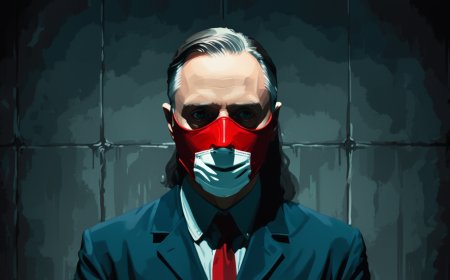


Secret Experiments and Hidden Agendas in Shutter Island: Fact or Fiction?
Martin Scorsese’s Shutter Island (2010) is a psychological thriller that pulls audiences into a dark and unsettling mystery, leaving viewers questioning what’s real and what’s imagined. Set in 1954, the film follows U.S. Marshal Teddy Daniels as he investigates the mysterious disappearance of a patient from Ashecliffe Hospital, an isolated mental institution. But as Teddy dives deeper into the investigation, he begins to suspect that the hospital may be conducting unethical experiments on its patients. With its complex story, Shutter Island raises questions about psychological manipulation, hidden agendas, and the ethics of mental health treatment. Could there be truth to the film’s sinister undertones?
 Sly Puzzle Games



Let’s explore the themes of Shutter Island, examining the real-world practices it echoes and whether such secret experiments and hidden agendas are based on fact or purely fiction.
1. The Alleged Experiments on Patients: How Realistic Are They?
In Shutter Island, Teddy becomes convinced that the hospital is using patients for cruel and secret experiments. He suspects that doctors are performing brain surgeries, psychological conditioning, and other invasive procedures to manipulate or control patients. This notion of using vulnerable individuals for experimentation has chilling historical roots, including real-life examples where mental health patients and prisoners were subjects in dubious research.
The film’s plot reflects historical cases like the CIA’s MK-Ultra program, which involved experiments on unwitting participants using drugs, hypnosis, and psychological manipulation to explore mind control. This program, which ran from the 1950s to the 1970s, involved subjects from psychiatric hospitals and even unwitting civilians. Shutter Island plays on this dark history, making the hospital’s secret experiments feel eerily plausible. Although the plot is fictional, the underlying fear of patients being exploited for medical research is not unfounded and taps into real ethical concerns about mental health treatment in the past.
2. Exploring the Concept of “Brainwashing” and Psychological Manipulation
A key theme in Shutter Island is the manipulation of the mind. Teddy suspects that the doctors on Shutter Island are performing experiments designed to alter patients’ thoughts, memories, and perceptions. This fear is amplified as Teddy questions his own reality, wondering if he, too, is being brainwashed.
The film reflects the mid-20th-century obsession with brainwashing, a concept that was widely feared and explored in both media and scientific communities. Programs like MK-Ultra, which used psychological techniques to “reprogram” individuals, were part of a broader Cold War paranoia that enemy states could “turn” people against their own beliefs. While Shutter Island amplifies these fears to create suspense, it’s based on the reality that psychological manipulation has been a focus of real-world experiments. The film taps into a societal fear of losing autonomy and control, posing questions about the ethics and boundaries of psychological research.
3. Electroshock Therapy and Lobotomies: The Dark History of Mental Health Treatment
In the setting of Shutter Island, many of the treatments administered to patients were common practices in mental health institutions of the 1950s. The film hints at the use of electroshock therapy and lobotomies, procedures that were often performed with little regard for patients’ rights or consent. In fact, these invasive treatments were widely practiced during the mid-20th century, sometimes leading to severe, irreversible consequences.
Lobotomies, in particular, were popular as a “treatment” for mental illness, especially among difficult or “unmanageable” patients. The procedure involved severing connections in the brain’s prefrontal cortex, which often resulted in severe impairments and loss of personality. Shutter Island portrays this era of mental health treatment accurately, shining a light on the dark side of psychiatric practices that prioritized control over compassion. Although Shutter Island is fictional, the threat of such invasive treatments on unsuspecting patients is a genuine part of psychiatric history, adding an unsettling realism to the film.
4. Ashecliffe Hospital as a Symbol of Isolation and Entrapment
The setting of Ashecliffe Hospital on Shutter Island is designed to create a sense of isolation and paranoia. The remote location, the imposing walls, and the strict rules all contribute to the feeling that this is a place where no one can escape. This sense of entrapment amplifies Teddy’s suspicions that the hospital is hiding something sinister.
Ashecliffe Hospital represents the very real fear of institutionalization and the lack of autonomy that patients often experienced in psychiatric hospitals of the past. These institutions were frequently isolated from society, and patients had little to no power to question their treatment or even leave. In this way, Shutter Island reflects the confinement and helplessness that many patients felt in real-life mental institutions, giving viewers a chilling glimpse into a system where individuals were at the mercy of authority figures.
5. The Ethical Dilemma of Treating Severe Mental Illness
One of the most compelling aspects of Shutter Island is its exploration of how society views and treats individuals with severe mental illnesses. The film raises ethical questions about the lengths to which medical professionals can go in order to “cure” or control patients. Are extreme measures justified if they aim to “help” the patient, or are they simply a way to suppress undesirable behaviors?
This ethical dilemma is still relevant today. The film questions whether invasive treatments are necessary for the well-being of the patient or if they are merely tools for controlling and silencing those who are different. Shutter Island forces audiences to consider the fine line between therapy and coercion, making us question how far is too far in the pursuit of mental health treatment.
6. The Final Twist: A Look at the Nature of Reality and Self-Perception
The ending of Shutter Island is one of its most compelling elements, with the revelation that Teddy himself is a patient on the island, undergoing an elaborate role-playing therapy as a last-ditch effort to bring him back to reality. The twist challenges the audience’s perception of reality, forcing us to question everything we’ve seen and heard.
This twist underscores a broader theme in Shutter Island — the difficulty of discerning truth from fiction, especially within the mind of someone struggling with trauma or mental illness. The film uses this ambiguity to explore how our perception of reality can be influenced by psychological trauma and mental conditioning, reflecting the complexities of treating and understanding mental illness. Teddy’s journey raises questions about the effectiveness and ethics of therapy that blurs the line between treatment and manipulation, asking if it’s ever possible to truly know what’s real.
Interesting Fact
Did you know that the real Shutter Island — known as Long Island, in Boston Harbor — served as a quarantine station and psychiatric hospital in the early 20th century? Though the island is now a public space, its history as a secluded medical facility adds an eerie layer of realism to the story’s setting.
Conclusion
Shutter Island blends elements of psychological horror, mystery, and historical truth to create a story that feels both fictional and grounded in reality. Through themes of manipulation, confinement, and questionable medical ethics, the film echoes real-life practices that were once common in mental health treatment. Although the narrative is fictional, Shutter Island draws on genuine fears about institutional control, the ethics of psychiatric care, and the lengths to which individuals can be manipulated in the name of “treatment.”
By blurring the line between reality and illusion, Shutter Island invites viewers to question the ethics of mental health treatment, the boundaries of autonomy, and the disturbing history of psychiatric experimentation. It serves as a reminder of the importance of compassion and ethical considerations in mental health care, highlighting the dangers of prioritizing control over the well-being of individuals.