

Is 1917 More Than a War Film? Hidden Allegories in the Story
Sam Mendes’ 1917 is often celebrated as a technical masterpiece, with its seamless one-shot illusion immersing viewers in the harrowing journey of two soldiers tasked with delivering a life-saving message during World War I. While its visceral depiction of war captures the chaos and brutality of combat, 1917 is more than just a war film. Beneath its gripping narrative lies a tapestry of hidden allegories that delve into themes of sacrifice, humanity, and the cyclical nature of conflict.
 Sly Puzzle Games


Let’s explore the deeper meanings behind 1917 to uncover the allegories that make it a profound meditation on war and the human condition.
1. The Mission as a Metaphor for Sacrifice
At its core, 1917 is about the selflessness of two young soldiers, Schofield and Blake, who risk their lives to save others. Their mission is a microcosm of the countless acts of sacrifice made during war, underscoring the immense personal cost of duty. Blake’s death early in the film is a stark reminder of the fragility of life and the weight of responsibility that falls on Schofield’s shoulders.
This theme speaks to the broader sacrifices made during wartime:
- Personal vs. Collective Good: Schofield’s journey reflects the tension between individual desires and the greater good, a struggle faced by all who serve in war.
- Heroism Redefined: Unlike traditional war films that glorify battlefield victories, 1917 highlights the quieter, often overlooked heroism of those who undertake impossible tasks for the sake of others.
Through this lens, the film becomes an allegory for the sacrifices required to uphold humanity in the face of destruction.
2. The Passage of Time: A Race Against Futility
The film’s real-time narrative structure emphasizes the relentless passage of time, mirroring the urgency and inevitability of war. The ticking clock underscores the soldiers’ desperation to complete their mission before it’s too late, but it also serves as a reminder of how time erodes everything — life, relationships, and even memories.
This element of the story evokes broader existential themes:
- The Ephemeral Nature of Life: Schofield’s journey through crumbling trenches and war-torn landscapes highlights the impermanence of human endeavors.
- Futility of War: The mission itself, while noble, exists within the larger, senseless cycle of war, raising questions about the true cost of conflict.
Time becomes both a driving force and a looming antagonist, reinforcing the idea that war accelerates the natural decay of life and civilization.
3. Nature as a Silent Witness
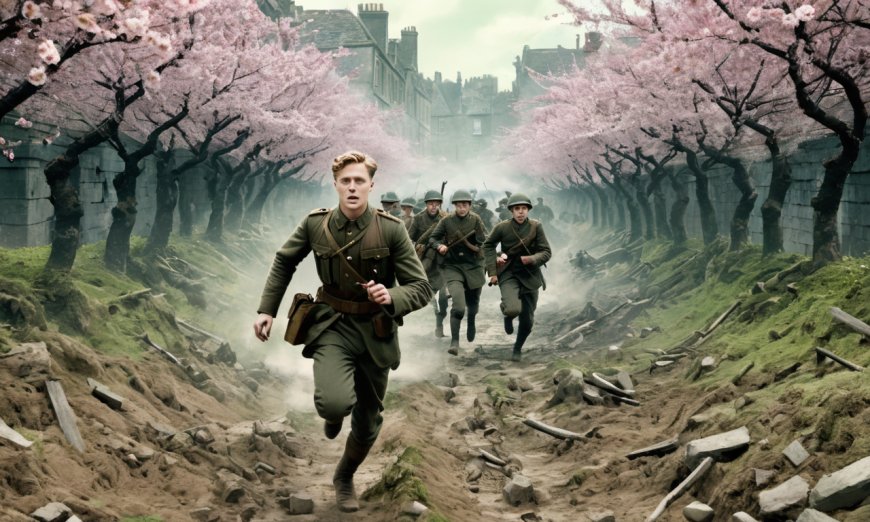
Throughout 1917, nature plays a significant role, acting as both a backdrop and a silent character in the story. From the tranquil fields and cherry blossoms to the haunting scenes of mud-filled trenches and dead bodies, the juxtaposition of beauty and destruction reflects the duality of human existence.
Nature’s presence carries allegorical weight:
- Indifference of Nature: The serene landscapes highlight nature’s detachment from human conflict, reminding viewers that the world persists regardless of humanity’s self-destruction.
- Rebirth Amid Destruction: The blooming cherry trees and flowing rivers symbolize resilience and renewal, suggesting that life continues even in the wake of devastation.
This interplay between nature and war reinforces the film’s meditation on humanity’s place within a larger, indifferent universe.
4. The Journey as a Modern Odyssey
Schofield’s journey echoes the structure of a classic hero’s quest, with each encounter and obstacle serving as a test of character, resilience, and humanity. From navigating treacherous trenches to fleeing a burning village, his experiences are imbued with mythic undertones.
Key allegorical elements of his journey include:
- The River as Baptism: Schofield’s plunge into the river and his emergence covered in cherry blossoms evoke a symbolic cleansing, representing his rebirth and renewed purpose.
- Encounters with Humanity: His brief interactions with others — from the French woman and her child to the soldiers singing “Wayfaring Stranger” — serve as reminders of the human connections that persist even amid chaos.
These elements elevate Schofield’s mission into an allegory for perseverance, redemption, and the search for meaning in an uncertain world.
5. The Endless Cycle of War
While 1917 focuses on a specific mission during World War I, its themes transcend time, offering a commentary on the cyclical nature of war itself. The film’s conclusion, which sees Schofield resting under a tree after completing his mission, mirrors its opening scene, creating a sense of circularity.
This structure suggests:
- War as a Perpetual State: The film implies that Schofield’s mission, though successful, is just one of countless such endeavors in an endless cycle of violence.
- Hope Amid Despair: Despite this bleak outlook, the film emphasizes the small victories — acts of bravery, kindness, and humanity — that persist even in the darkest times.
By framing the story as part of a larger, ongoing narrative, 1917 challenges viewers to reflect on the ways history repeats itself and the importance of striving for peace.
Interesting Fact
Did you know that 1917 was inspired by stories Sam Mendes heard from his grandfather, who served in World War I? The film’s personal origins lend it an intimate, authentic quality, blending historical realism with universal themes.
Conclusion
1917 is far more than a war film; it’s a deeply allegorical tale about sacrifice, resilience, and the human spirit. Through its immersive storytelling, stunning visuals, and poignant themes, the film invites viewers to reflect on the fragility of life, the futility of war, and the enduring strength of human connection.
By intertwining personal narratives with universal truths, 1917 transcends its historical setting to become a timeless meditation on the struggles and triumphs of humanity. It’s a powerful reminder that even in the face of unimaginable darkness, acts of courage and compassion can illuminate the path forward.