

Simulated Reality: Could We Be Living in a Computer Program?
Examine the compelling argument from physics and philosophy that suggests our entire existence might be a simulation created by advanced technology.
 Sly Puzzle Games
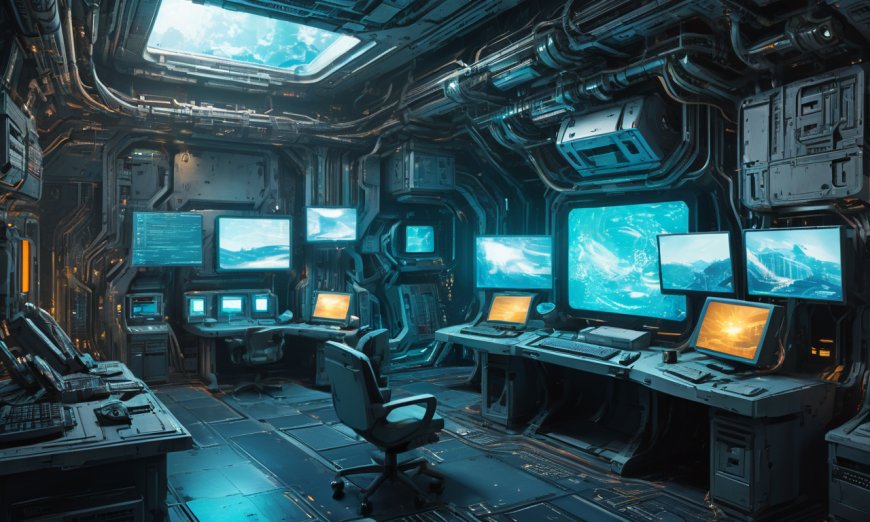


Have you ever wondered if the world around you is real—or if it could all be an elaborate illusion? The idea that we might be living in a computer-generated simulation has intrigued philosophers and scientists for decades. This theory, known as "simulation theory" or "simulated reality," suggests that our entire existence could be a virtual construct created by an advanced civilization. While it may sound like science fiction, the simulation hypothesis is taken seriously by some physicists, philosophers, and technologists, raising profound questions about the nature of reality, free will, and the future of humanity. In this article, we will explore the compelling arguments behind the simulation theory and consider what it might mean if we are, in fact, living inside a computer program.
The Simulation Hypothesis: A Modern Philosophical Debate
- The Origins of the Simulation Theory
The idea that reality might be an illusion is not new. Philosophers such as Plato and René Descartes questioned the nature of existence and our ability to truly know whether the world around us is "real." Plato’s Allegory of the Cave suggested that what we perceive as reality might be mere shadows of a deeper truth, while Descartes famously pondered whether an evil demon might be deceiving our senses, making us believe in a reality that doesn’t exist.
In the modern era, the simulation hypothesis gained traction with advancements in computer technology and artificial intelligence. In 2003, philosopher Nick Bostrom of the University of Oxford put forth a formal argument for the simulation theory, known as the Simulation Argument. Bostrom proposed that one of the following three statements must be true:
- Humanity will go extinct before developing the ability to create realistic simulations of entire civilizations.
- Advanced civilizations that achieve such technology choose not to run simulations of their ancestors.
- We are almost certainly living in a computer simulation.
The third scenario suggests that if it’s possible for advanced civilizations to run realistic simulations of their ancestors, and if they choose to do so, then the number of simulated worlds would vastly outnumber the number of real worlds. In this case, the odds that we are living in the "base" reality, rather than one of countless simulations, would be extremely small.
- Simulation Theory and the "Matrix" Effect
Popular culture has brought the idea of simulated reality to a broader audience, particularly through movies like The Matrix. In the film, humans unknowingly live in a computer-generated simulation, while their physical bodies are used as energy sources for machines. The movie’s central premise—that our perceived reality could be an artificial construct—resonates with the simulation hypothesis and has become a touchstone in discussions of simulated reality.
While The Matrix is an extreme and dystopian portrayal, the underlying question remains: How can we know for certain whether our reality is real or just an advanced simulation designed to perfectly mimic the physical world?
The Scientific Case for Simulated Reality
- The Advancement of Technology
As computer processing power continues to grow exponentially, we are already creating increasingly sophisticated virtual worlds. Video games, virtual reality (VR), and augmented reality (AR) provide immersive experiences that simulate real-world environments. If our technology continues to improve, it's conceivable that future civilizations could develop the computational capacity to create simulations so detailed that they are indistinguishable from reality.
In fact, some experts predict that within a few decades, we may have the technology to create "ancestor simulations"—digital worlds populated by conscious beings with thoughts, emotions, and experiences just like ours. If such simulations become commonplace in the future, it raises the possibility that we, too, are living in one right now.
- Quantum Mechanics and the Nature of Reality
Quantum mechanics, the branch of physics that studies the behavior of particles at the smallest scales, has revealed some strange and counterintuitive truths about the universe. One of the most perplexing phenomena in quantum mechanics is wave-particle duality, where particles like electrons can behave both as particles and as waves, depending on how they are observed. Similarly, the Heisenberg uncertainty principle suggests that we can never know both the exact position and velocity of a particle at the same time.
These oddities have led some physicists to speculate that the universe might behave like a complex computational system, where certain "quantum rules" govern the behavior of particles in a way that resembles computer code. The idea that reality could be "programmed" in this way aligns with the simulation hypothesis, where the fundamental laws of physics are part of the underlying "code" that generates our simulated experience.
- Digital Physics and the Pixelated Universe
Digital physics is a theoretical approach that suggests the universe is fundamentally discrete, meaning that space and time could be made up of tiny, indivisible units, much like the pixels on a computer screen. This idea is known as the "pixelated universe" theory. Just as a high-resolution image looks continuous to the human eye but is actually made up of discrete pixels, our universe may appear continuous but be composed of tiny, discrete building blocks.
If space and time are quantized, it would support the idea that the universe functions like a computer simulation, where information is processed in finite bits. Some researchers, such as physicist Seth Lloyd, have even proposed that the universe could be a giant quantum computer, calculating the laws of physics at every moment.
Philosophical Implications of Simulated Reality
- The Nature of Consciousness
If we are living in a simulation, one of the biggest philosophical questions is the nature of consciousness. Are we real, conscious beings, or are our minds part of the simulation itself? Can simulated beings experience genuine emotions, thoughts, and free will, or are these just programmed responses in a digital environment?
These questions raise profound ethical issues. If our consciousness is simulated, what does that mean for our sense of self, our relationships, and our place in the universe? Would the creators of the simulation bear responsibility for our well-being, or would we exist merely as characters in a vast, computational experiment?
- Free Will vs. Determinism
Another philosophical question that arises from the simulation hypothesis is whether free will truly exists in a simulated world. If our actions and thoughts are the result of programmed algorithms, does that mean we are living in a deterministic universe where every choice we make is predetermined by the "code"? Or, could advanced simulations allow for randomness and unpredictability, giving us the illusion of free will even within a controlled environment?
- The Purpose of the Simulation
If we are living in a simulation, one of the most intriguing questions is: why? What is the purpose of the simulation? Are we part of an advanced civilization’s experiment, designed to study human behavior or explore different evolutionary outcomes? Could the simulation be a form of entertainment or education for our creators? Or might we be living in a simulation designed to preserve human consciousness after the extinction of physical humanity?
The Search for Evidence of Simulated Reality
- Looking for Glitches in the Matrix
If we are living in a simulated reality, could we find evidence of "glitches" or limitations in the system? Some proponents of the simulation hypothesis suggest that certain anomalies in physics or cosmic phenomena—such as the inexplicable nature of dark matter or the bizarre behavior of particles in quantum experiments—could be evidence of the underlying "code" of the universe.
While we have yet to discover definitive proof of a simulated universe, some researchers are actively exploring ways to test the hypothesis. For example, scientists have proposed experiments to detect patterns or irregularities in cosmic radiation that might indicate the universe has a digital structure.
- Searching for the Limits of Computation
Another way to test the simulation theory might be to look for the limits of the computational power required to run such a simulation. As we simulate more complex virtual worlds, it’s possible that we may eventually hit a boundary where the universe’s ability to process information breaks down—similar to how a computer program might crash or lag under heavy load. If we observe these computational "limits" in nature, it could provide evidence that we are living in a simulated reality.
A Little Fun Fact
Oh, and by the way, did you know that billionaire entrepreneur Elon Musk is a strong supporter of the simulation hypothesis? Musk famously remarked that there’s a "one in billions" chance that we are living in base reality, suggesting that advanced civilizations would almost certainly create simulated worlds indistinguishable from reality.
Conclusion
The simulation hypothesis remains a speculative but fascinating theory that challenges our understanding of reality, consciousness, and existence itself. While we may never know for certain whether we are living in a computer program, the questions raised by the simulation theory offer deep insights into the nature of the universe and our place within it. As technology continues to advance, we may one day develop the tools to test this theory—or perhaps even create simulations of our own, mirroring the world in which we live.
And if you love pondering deep mysteries and exploring mind-bending concepts, don’t forget to check out our word puzzle game, Sly Puzzle Games. It’s a great way to keep your brain sharp while contemplating the possibilities of simulated reality!