

Hidden Connections Between The Matrix Resurrections and the Original Trilogy
When The Matrix Resurrections hit screens, it didn’t just continue the legacy of one of the most iconic sci-fi trilogies of all time — it cleverly intertwined itself with the past. Lana Wachowski’s return to the Matrix universe isn’t just a sequel; it’s a self-aware meta-commentary, filled with callbacks, hidden references, and subtle connections to the original trilogy. Let’s explore the hidden connections between The Matrix Resurrections and the original trilogy, decoding the nods, Easter eggs, and deeper meanings that tie the films together.
 Sly Puzzle Games


1. Neo and Trinity: Echoes of Destiny
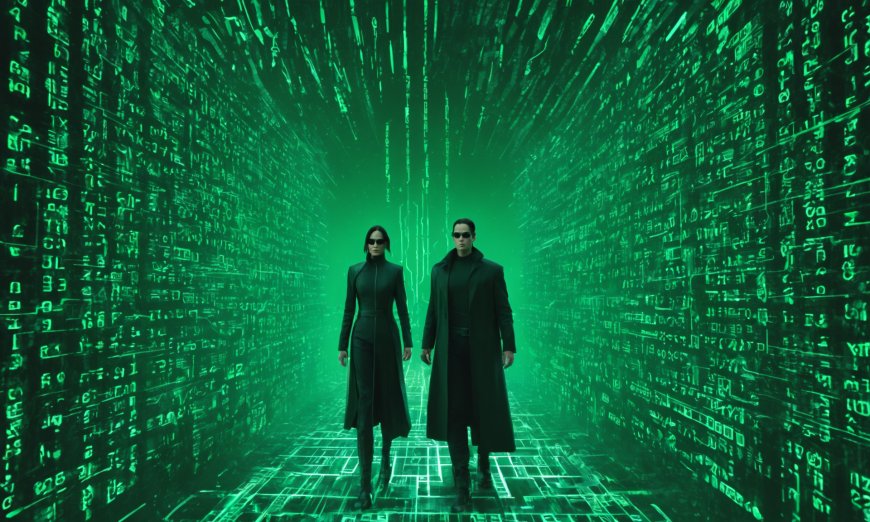
The bond between Neo (Keanu Reeves) and Trinity (Carrie-Anne Moss) was central to the original trilogy, and Resurrections doubles down on their connection.
- The Hidden Detail: In the original trilogy, Neo’s love for Trinity is portrayed as both his strength and weakness. In Resurrections, this connection is taken a step further — Trinity is now just as critical to the survival of the Matrix as Neo himself.
- Key Scene: In the coffee shop “Simulatte,” the way Neo and Trinity glance at each other mirrors their first meeting in the original film.
- The Meaning: Their love isn’t just romantic; it’s the core code of the Matrix's stability and an anchor for both their identities.
Takeaway: Love, not power, is the true driving force behind the Matrix narrative.
2. Déjà Vu and the Black Cat
The concept of déjà vu is deeply embedded in The Matrix lore, signaling glitches or changes in the system.
- The Hidden Detail: The black cat named Deja Vu reappears in Resurrections, reinforcing the theme of cyclical events and repetition.
- Key Scene: In the analyst's office, the cat slinks by just as Neo begins questioning his reality.
- The Meaning: The cat serves as a symbolic reminder that, despite the changes, the Matrix is still manipulating and repeating patterns.
Takeaway: The appearance of Deja Vu suggests that the Matrix is still a cage, albeit one with shinier bars.
3. Mirrors: Portals Between Worlds
In The Matrix Resurrections, mirrors serve as gateways between realities, echoing their symbolic importance in the original trilogy.
- The Hidden Detail: In the first Matrix, Neo touches a mirror, and it consumes him, marking his entry into the real world. In Resurrections, mirrors are used to travel between the Matrix and the real world.
- Key Scene: Neo escapes through a cracked mirror, visually mirroring (pun intended) his first experience in the original film.
- The Meaning: Mirrors symbolize both perception and transition, reflecting the fragility of identity within the Matrix.
Takeaway: The cracked mirrors suggest that even the system itself is beginning to fracture.
4. The Analyst and The Architect: Two Sides of Control
The Analyst (Neil Patrick Harris) serves as the new face of control, replacing the Architect from The Matrix Reloaded.
- The Hidden Detail: While the Architect relied on cold logic and mathematics to maintain the Matrix, the Analyst uses emotions — particularly fear, hope, and love — as tools of control.
- Key Scene: The Analyst explicitly states that the new Matrix thrives on emotional manipulation rather than rational compliance.
- The Meaning: The system has evolved, but its purpose remains the same: control.
Takeaway: The Analyst represents a modern evolution of the Architect’s philosophy — control through emotions rather than logic.
5. Morpheus 2.0: An Echo, Not a Copy
Yahya Abdul-Mateen II’s portrayal of Morpheus isn’t a straightforward replacement of Laurence Fishburne’s original character but an intentional evolution.
- The Hidden Detail: The new Morpheus is both a program and a reflection of the original — he’s less a person and more an archetype.
- Key Scene: The moment Morpheus emerges from the bathroom mirror directly references his iconic introduction in the original Matrix.
- The Meaning: Morpheus 2.0 is a self-aware construct, highlighting the cyclical nature of the Matrix and its characters.
Takeaway: Morpheus isn’t just reborn; he’s reimagined as an essential piece of the Matrix puzzle.
6. The Power of Choice: A Recurring Theme
Choice has always been a central theme in The Matrix, and Resurrections doesn’t shy away from revisiting it.
- The Hidden Detail: In The Matrix Reloaded, the Architect tells Neo that choice is an illusion. In Resurrections, the Analyst offers Neo the choice between staying in the Matrix or reuniting with Trinity — but it’s framed as an emotional trap.
- Key Scene: Trinity must make her own choice in the coffee shop — a moment that echoes Neo’s initial choice with the red and blue pills.
- The Meaning: Resurrections suggests that true choice comes not from options presented to us but from recognizing and rejecting manipulation.
Takeaway: The illusion of choice is a recurring mechanism of control in every iteration of the Matrix.
7. The Red and Blue Pills: Symbolism Reimagined
The red and blue pills are perhaps the most iconic symbols from The Matrix. In Resurrections, they return with an updated meaning.
- The Hidden Detail: The Analyst keeps Neo medicated with blue pills, ensuring he remains subdued and docile.
- Key Scene: When Neo finally stops taking them, the colors in the scenes subtly shift, becoming more vibrant and clear.
- The Meaning: The blue pill now symbolizes complacency in an emotionally manipulative system, while the red pill signifies self-awareness and agency.
Takeaway: The pills have transcended their original binary symbolism, now representing emotional freedom versus emotional servitude.
8. The Music: Nostalgia Meets Modernity
The music in Resurrections blends new compositions with echoes of Don Davis’ original score.
- The Hidden Detail: The swelling strings and distorted echoes of the original Matrix theme resurface during key moments.
- Key Scene: The final rooftop escape echoes Neo and Trinity’s iconic skyscraper flight from The Matrix Revolutions.
- The Meaning: Music isn’t just background — it’s a narrative bridge connecting the old Matrix to the new.
Takeaway: The soundtrack serves as both an emotional cue and a tool for continuity.
9. Smith: The Yin to Neo’s Yang
Jonathan Groff’s portrayal of Smith may seem like a departure from Hugo Weaving’s original version, but their connection remains intact.
- The Hidden Detail: Smith still refers to Neo as “Mr. Anderson,” a callback to his signature phrase.
- Key Scene: Their brutal fight in the office parallels their final battle in Revolutions.
- The Meaning: Smith is more than just a villain; he’s the chaotic counterbalance to Neo’s order.
Takeaway: Smith remains the ultimate foil to Neo, locked in eternal balance.
Interesting Fact:
Did you know The Matrix Resurrections was intentionally written as a meta-commentary on Hollywood’s obsession with reboots and sequels? Lana Wachowski cleverly inserted this critique into the movie’s narrative.
Conclusion
The Matrix Resurrections is more than just a sequel — it’s a reflection on the original trilogy, a commentary on modern technology, and an exploration of timeless human struggles. Every glance, every color, every line of dialogue is crafted to echo the past while pointing toward a new future.
Whether it’s Neo and Trinity’s eternal bond, the Analyst’s manipulative control, or Morpheus’ reimagined form, Resurrections ensures that the Matrix continues to challenge us, inspire us, and make us question our reality.