


The Mystery of the Voynich Manuscript
Delve into the enigma of the Voynich Manuscript, a medieval document written in an unknown script. Explore attempts to decode it and theories about its origin and purpose.
 Sly Puzzle Games
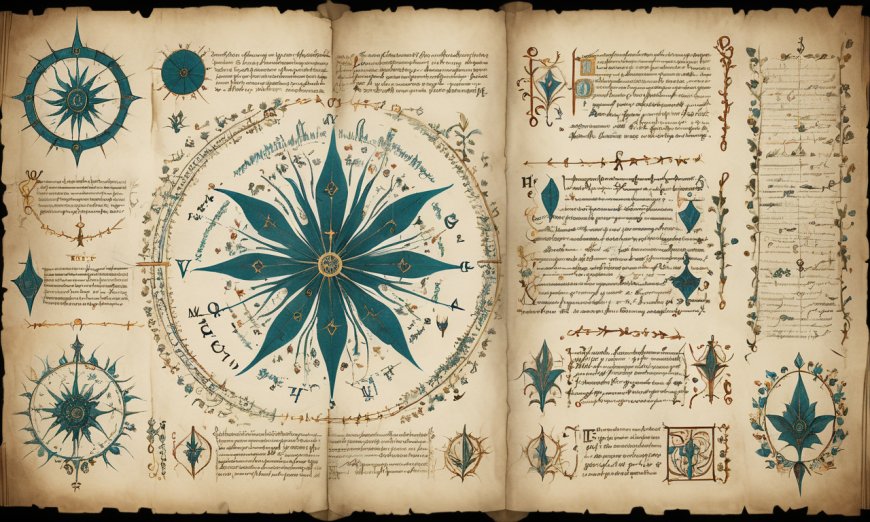


The Voynich Manuscript, often hailed as the world's most mysterious book, has baffled scholars, cryptographers, and linguists since it was rediscovered in 1912 by antiquarian bookseller Wilfrid Voynich. Written in an unknown script and filled with strange illustrations, this medieval document has defied all attempts to decode its text, leading to numerous theories about its origin and purpose. Let’s delve into the enigmatic history of the Voynich Manuscript, the efforts to decipher it, and the various theories that seek to explain this perplexing artifact.
History of the Voynich Manuscript
- Discovery and Acquisition
The manuscript was acquired by Wilfrid Voynich in 1912 from the Jesuit College at Villa Mondragone in Italy. It is named after him and is currently housed at the Beinecke Rare Book & Manuscript Library at Yale University.
- Physical Characteristics
The Voynich Manuscript consists of approximately 240 pages, written on vellum. The text is composed in an unknown script that has never been seen in any other document. The manuscript also features a variety of illustrations, including strange plants, astronomical diagrams, and naked figures in elaborate poses.
Attempts to Decode the Manuscript
- Early Efforts
Since its rediscovery, numerous attempts have been made to decode the Voynich Manuscript. Early efforts involved some of the best cryptographers of the time, including William F. Friedman, who broke the Japanese Purple cipher during World War II. Despite their expertise, these efforts failed to unlock the manuscript's secrets.
- Modern Cryptography
In recent years, advances in computer technology and cryptographic analysis have brought new hope to decoding the manuscript. However, despite sophisticated algorithms and pattern recognition software, the script remains undeciphered.
- Linguistic Approaches
Linguists have also attempted to decode the manuscript by comparing its script to known languages and writing systems. Some have suggested it might be a constructed language or a form of shorthand, but no definitive correlations have been found.
Theories About Its Origin and Purpose
The Voynich Manuscript has inspired a plethora of theories regarding its origin and purpose. Here are some of the most prominent ones:
- Herbal and Medical Text
One theory posits that the manuscript is an herbal or medical text. The numerous botanical illustrations and diagrams of human anatomy suggest that it could be a compendium of medicinal plants and treatments. However, the plants depicted do not match any known species, complicating this theory.
- Astronomical or Alchemical Treatise
The manuscript contains several astrological and astronomical diagrams, leading some to believe it might be an alchemical or astronomical treatise. The zodiac-like symbols and charts could indicate an attempt to combine astronomy with medicinal practices.
- Encoded Message
Some believe the manuscript is an encoded message, possibly a cipher created to protect sensitive information. This theory suggests that the text might be a coded message or a series of encrypted instructions. However, the lack of a known cipher system or key has made this theory difficult to prove.
- Medieval Hoax
Another possibility is that the Voynich Manuscript is a sophisticated medieval hoax. Some scholars argue that the manuscript was created to impress or deceive a wealthy patron. The elaborate script and illustrations could be the work of a skilled scribe aiming to create an air of mystery.
- Unknown Language or Script
It is also possible that the manuscript is written in an entirely unknown language or script, potentially a lost language or one created by the author. This would explain why all efforts to decode it using known languages and scripts have failed.
A Little Fun Fact
Oh, and by the way, did you know that carbon dating of the vellum has dated the manuscript to the early 15th century, between 1404 and 1438? This means that the Voynich Manuscript is over 600 years old, adding to its allure and mystery.
Conclusion
The Voynich Manuscript remains one of the most enigmatic artifacts of the medieval period. Despite over a century of study and numerous attempts to decode its text, its true meaning and purpose continue to elude us. Whether it is a medical treatise, an alchemical guide, a coded message, or a masterful hoax, the Voynich Manuscript stands as a testament to the enduring mystery and intrigue of the written word.
And if you love solving mysteries and exploring historical enigmas, don’t forget to check out our word puzzle game, Sly Puzzle Games. It's a great way to keep your brain sharp and entertained. Happy exploring!