

The Dark Secrets of The Dark Tower: What’s Hidden in Stephen King’s Universe?
Stephen King’s The Dark Tower series is often referred to as the linchpin of his literary universe. Spanning eight novels and countless connections to King’s other works, The Dark Tower is an epic tale that blends fantasy, horror, and Western elements. At its heart lies the enigmatic Gunslinger, Roland Deschain, whose quest to reach the titular Dark Tower is filled with danger, mystery, and secrets. But beneath its sprawling narrative lies a web of hidden connections, dark symbolism, and philosophical musings that deepen the series’ impact.
 Sly Puzzle Games
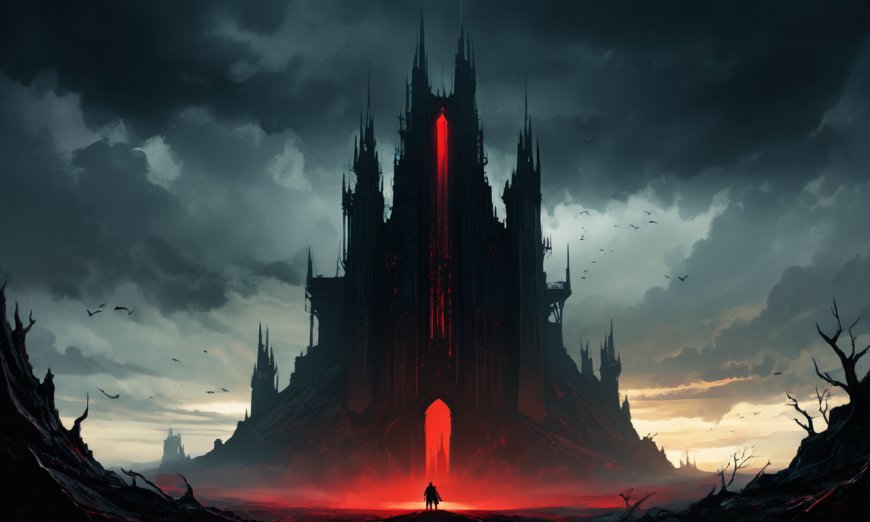


Let’s dive into the dark secrets of The Dark Tower to uncover the hidden layers of Stephen King’s most ambitious creation and explore what it reveals about his larger universe.
1. The Dark Tower: A Nexus of All Worlds
The Dark Tower itself is more than just a physical structure; it’s a metaphysical nexus that holds all worlds together. Its existence symbolizes stability, and its destruction would mean chaos across the multiverse. The Tower’s levels and spokes connect alternate realities, linking not only The Dark Tower series but also King’s other works, including It, The Stand, Salem’s Lot, and The Shining.
This concept of a central hub reveals one of the series’ greatest secrets: that all of King’s stories are interconnected. The Tower serves as a metaphor for storytelling itself, with each level representing a different reality or tale. This multi-layered symbolism emphasizes the importance of stories in holding together the fabric of reality, making The Dark Tower a meta-commentary on King’s career and the nature of fiction itself.
2. Ka: The Unseen Force That Drives the Quest
A recurring theme in The Dark Tower is the concept of “ka,” a mysterious force that guides destiny. Often referred to as fate, destiny, or even karma, ka is portrayed as an all-encompassing power that shapes the lives of Roland and his ka-tet (his group of companions). While ka offers purpose, it also comes with sacrifice, often requiring brutal choices and great loss.
The presence of ka raises philosophical questions about free will and predestination. Roland’s relentless pursuit of the Tower is driven by ka, yet it’s unclear whether his choices are truly his own or if he’s merely a pawn in a cosmic game. Through ka, King explores the tension between agency and inevitability, making the series a profound meditation on the forces that shape our lives.
3. The Crimson King: A Villain Shrouded in Mystery
The Crimson King, the series’ primary antagonist, is a chaotic force that seeks to destroy the Tower and plunge the multiverse into ruin. While his motives are partially explained, his character remains enigmatic, symbolizing pure malevolence and the existential threat of chaos. He’s not just a villain in The Dark Tower; he’s a recurring figure in King’s universe, appearing in works like Insomnia and The Eyes of the Dragon.
The Crimson King’s role as an ultimate force of evil mirrors the archetypal battle between order and chaos found in many mythologies. However, his relative ambiguity leaves room for interpretation, suggesting that true evil is not always comprehensible. The King’s presence in The Dark Tower reminds readers that darkness often lurks in the background, influencing events in ways that are both subtle and catastrophic.
4. The Connections to King’s Other Works
One of the most fascinating aspects of The Dark Tower is its intricate web of connections to King’s broader universe. Characters, places, and themes from other novels frequently appear, weaving a complex tapestry of interrelated stories. For example:
- Father Callahan, a major character in Salem’s Lot, plays a significant role in The Dark Tower series.
- The Man in Black, also known as Randall Flagg, appears in The Stand, The Eyes of the Dragon, and other King novels.
- The number 19, a recurring motif in the series, shows up as a mysterious and foreboding symbol in several of King’s works.
These connections create a sense of continuity and depth, suggesting that all of King’s stories are part of a larger narrative. For fans, uncovering these links adds an extra layer of intrigue, making The Dark Tower not just a standalone epic but the key to understanding King’s entire literary universe.
5. Roland’s Endless Cycle: A Meditation on Redemption
One of the series’ most haunting revelations comes at its conclusion, where Roland reaches the Tower only to discover that he is trapped in an endless loop, destined to repeat his quest. This twist redefines the story, transforming it into a meditation on redemption, growth, and the consequences of obsession. Each iteration of Roland’s journey offers him an opportunity to learn and change, though his progress remains painfully slow.
This cyclical structure reflects themes of karma and eternal recurrence, suggesting that true redemption requires more than reaching a goal — it demands self-awareness and transformation. Roland’s endless cycle is a dark but profound commentary on human nature, emphasizing that without reflection and change, we are doomed to repeat our mistakes.
6. The Dark Tower as a Commentary on Creation
In a meta twist, Stephen King inserts himself into the narrative of The Dark Tower, portraying himself as a writer whose work directly impacts Roland’s quest. This self-referential element blurs the line between fiction and reality, turning the series into a meditation on the act of creation. King’s inclusion raises questions about the responsibility of creators and the ways in which stories influence the real world.
By making himself a character, King acknowledges the power of storytelling and the role of authors as architects of their worlds. This narrative choice invites readers to reflect on the relationship between creators and their creations, suggesting that every story holds the potential to shape perception, reality, and even destiny.
Interesting Fact
Did you know that Stephen King was inspired by Robert Browning’s poem “Childe Roland to the Dark Tower Came” when creating the series? The poem’s haunting imagery and themes of an endless quest provided the foundation for Roland’s journey and the Tower’s enigmatic allure.
Conclusion
The Dark Tower is much more than a sprawling fantasy epic; it’s a deeply philosophical exploration of storytelling, destiny, and the human condition. Through its richly layered narrative, interconnected universe, and dark symbolism, the series offers a profound meditation on the forces that shape our lives and the choices we make in the face of chaos.
By uncovering the secrets of the Tower, Roland’s journey, and King’s broader universe, readers gain a deeper understanding of the themes that define The Dark Tower — and, by extension, Stephen King’s entire body of work. Whether viewed as a cautionary tale, a cosmic mystery, or a love letter to storytelling, The Dark Tower remains a towering achievement in modern literature.