


Stonehenge: Ancient Enigma
Delve into the history and mysteries of Stonehenge, the prehistoric monument in England. Explore theories about its purpose and the people who built it.
 Sly Puzzle Games
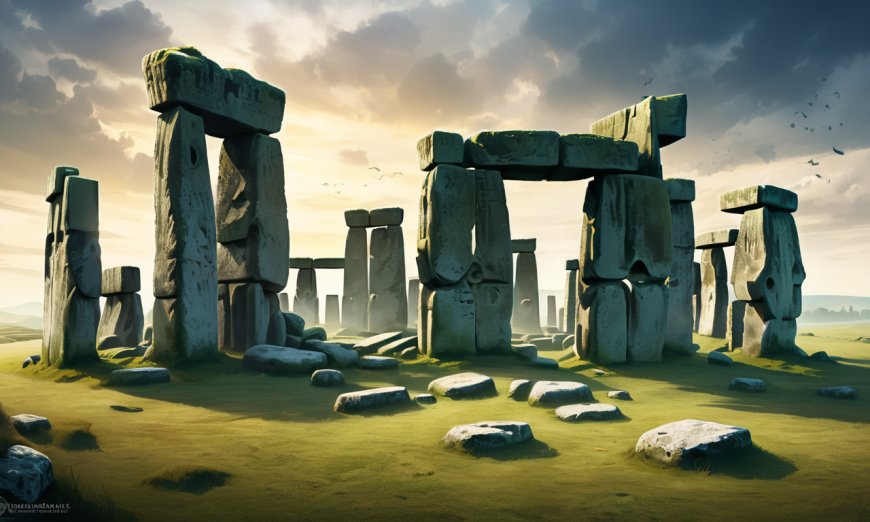


Stonehenge stands as one of the most iconic and mysterious prehistoric monuments in the world. Located on Salisbury Plain in Wiltshire, England, this ancient structure has fascinated historians, archaeologists, and visitors for centuries. Despite extensive research, many questions about Stonehenge remain unanswered, particularly regarding its purpose and the people who built it. Let's delve into the history, construction, and enduring mysteries of Stonehenge.
History of Stonehenge
- Construction Phases
Stonehenge was constructed in several phases over a period of more than a thousand years, beginning around 3000 BCE. The site evolved from a simple earthwork enclosure to the complex arrangement of massive stones that we see today.
- Phase 1 (c. 3000 BCE): The earliest phase involved the creation of a circular ditch and bank, with 56 pits known as Aubrey Holes, which may have held wooden posts or stones.
- Phase 2 (c. 2500 BCE): The iconic sarsen stones, weighing up to 25 tons each, were transported from Marlborough Downs, about 20 miles away. These stones were erected in a horseshoe and outer circle, with lintels placed on top to form a continuous ring.
- Phase 3 (c. 2000 BCE): Smaller bluestones, weighing up to 4 tons each, were transported from the Preseli Hills in Wales, about 150 miles away. These stones were arranged within the larger sarsen structure.
- Architectural Features
Stonehenge’s design includes precise alignments with celestial events. The most famous alignment is with the summer solstice sunrise and the winter solstice sunset, suggesting a connection to astronomical observations and calendar functions.
Theories About Its Purpose
The purpose of Stonehenge has been the subject of much speculation and debate. Several theories have been proposed, each offering a different perspective on why this monument was built:
- Astronomical Observatory
One of the most widely accepted theories is that Stonehenge served as an astronomical observatory. The alignment with solstices and other celestial events suggests that it could have been used to track the movements of the sun and moon, helping to create a calendar for agricultural and ceremonial purposes.
- Religious and Ceremonial Site
Stonehenge may have been a site for religious and ceremonial activities. Its construction and layout indicate a place of significant spiritual importance. The presence of human remains and evidence of feasting suggests that rituals and ceremonies, possibly related to ancestor worship or seasonal festivals, were conducted here.
- Healing Center
Another theory posits that Stonehenge was a center for healing. The bluestones, in particular, were believed to have curative properties. Archaeological findings of individuals with injuries or illnesses buried at the site support this idea, indicating that people may have traveled to Stonehenge seeking healing.
- Burial Ground
Stonehenge has also been proposed as a burial ground for elite members of society. Excavations have revealed numerous burials in and around the site, including the remains of high-status individuals. This suggests that Stonehenge may have served as a monumental cemetery for important figures in the community.
- Sound and Acoustic Properties
Some researchers have explored the acoustic properties of Stonehenge, suggesting that it may have been designed to enhance sound during rituals and ceremonies. The arrangement of the stones creates a unique acoustic environment, which could have played a role in its function as a ceremonial site.
The Builders of Stonehenge
The construction of Stonehenge required considerable planning, organization, and labor. While the exact identity of the builders remains unknown, it is believed that they were part of a sophisticated society with advanced knowledge of engineering, astronomy, and social organization.
- Neolithic People
The people who built Stonehenge were part of the Neolithic (New Stone Age) culture. They were skilled farmers, toolmakers, and builders who lived in settled communities. The construction of such a monumental structure indicates a high degree of social cohesion and cooperation.
- Beaker Culture
Later phases of Stonehenge’s construction are associated with the Beaker culture, named after the distinctive pottery they used. The Beaker people are believed to have brought new technologies and cultural practices to the region, contributing to the final stages of Stonehenge’s development.
A Little Fun Fact
Oh, and by the way, did you know that in addition to its astronomical alignments, Stonehenge has a unique feature known as the Heel Stone? This solitary stone stands outside the main circle and aligns with the sunrise on the summer solstice, highlighting the monument’s connection to celestial events.
Conclusion
Stonehenge remains an enduring enigma, a testament to the ingenuity and vision of its builders. While much has been learned about this ancient monument, its full purpose and significance continue to elude us. As research progresses and new technologies are applied to the study of Stonehenge, we may one day uncover more secrets of this fascinating site.
And if you love solving mysteries and exploring historical enigmas, don’t forget to check out our word puzzle game, Sly Puzzle Games. It's a great way to keep your brain sharp and entertained. Happy exploring!