

The Truth Behind Eyes Wide Shut: Is This Really About Elite Secret Societies?
Stanley Kubrick’s final film, Eyes Wide Shut, has fascinated audiences with its haunting imagery, cryptic themes, and an exploration of power, secrecy, and desire. The story follows Dr. Bill Harford, who stumbles upon a mysterious, high-society cult, revealing an underworld of secrecy and influence. While Eyes Wide Shut is often regarded as a psychological thriller about sexual desire and jealousy, many believe Kubrick intended it as a commentary on elite secret societies and the hidden power structures that influence our world.
 Sly Puzzle Games


Let’s explore the hidden messages and theories surrounding Eyes Wide Shut to see if Kubrick’s vision offers a glimpse into the hidden world of elite societies.
1. The Secret Society: A Symbol of Elite Power and Control
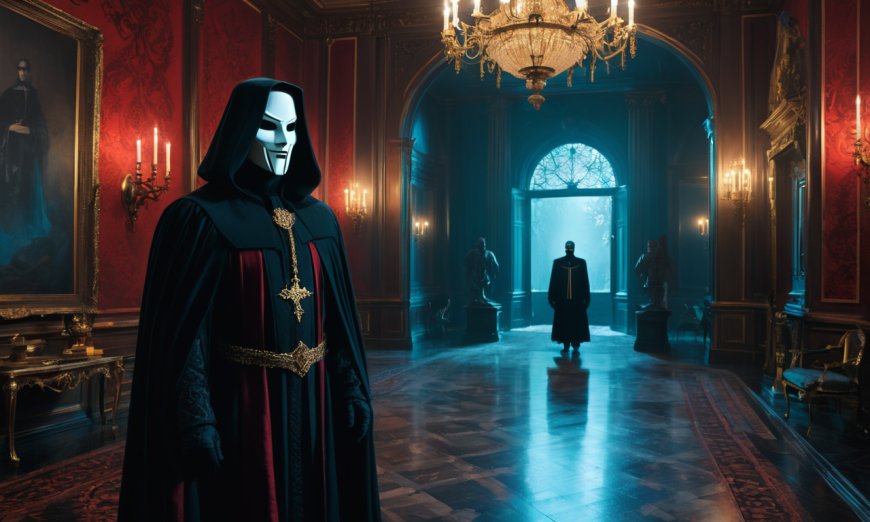
One of the most unsettling scenes in Eyes Wide Shut is the ritualistic gathering Bill witnesses, hosted by a secretive, high-society group. Dressed in cloaks and masks, attendees participate in rituals that emphasize power, submission, and exclusivity. This secret society reflects the allure and danger of elite groups that operate behind closed doors, pulling strings and making decisions that affect ordinary lives.
This portrayal taps into real-world suspicions about elite organizations, such as the Illuminati or Freemasons, which are often rumored to hold clandestine gatherings and influence global events. Kubrick’s depiction suggests that power can be intoxicating, and those who belong to these exclusive circles may exploit their positions for their own gain, shielded by secrecy and wealth. The film subtly critiques the arrogance and moral detachment of these elites, hinting at the dangers of unchecked power.
2. The Masks and Cloaks: Symbolism of Identity and Anonymity
The use of masks in the ritual scene is one of the most iconic aspects of Eyes Wide Shut. The masks serve as a metaphor for the hidden identities of society’s elite, allowing them to act without accountability. The anonymity afforded by the masks symbolizes the detachment that often accompanies wealth and privilege, where individuals can engage in morally questionable actions without facing consequences.
This use of masks can be seen as Kubrick’s commentary on how power often shields elites from scrutiny. The masks symbolize the facade of respectability that many elites maintain publicly, while privately indulging in vices and exploiting their status. Kubrick’s choice to emphasize anonymity within the secret society suggests that these elites exist in a space beyond social norms and ethics, where their actions are obscured from public view.
3. The Role of Sexual Rituals and Power Dynamics
The film’s ritualistic gathering includes scenes of highly stylized sexual acts, which play a significant role in the secret society’s ceremonies. These acts are not about love or connection; rather, they are exercises in power, dominance, and submission. Kubrick uses sexuality as a metaphor for control, portraying how elite societies can manipulate desire to assert dominance over others.
The emphasis on sexual rituals highlights the exploitation and objectification that occur within certain power structures. Kubrick suggests that, for some elites, the pursuit of pleasure is intertwined with the assertion of control. The ritual’s orchestrated nature hints at the idea that in such societies, individuals’ bodies are treated as commodities, reinforcing the notion that elites may view people as tools to fulfill their desires, rather than as individuals with autonomy.
4. Kubrick’s Commentary on Wealth and Morality
Throughout Eyes Wide Shut, Kubrick contrasts the lives of the wealthy with those of ordinary people. Dr. Harford’s foray into the world of the elite exposes him to a morally ambiguous realm where conventional ethics seem not to apply. While Harford initially believes in justice and loyalty, his experiences with the secret society challenge his notions of morality, showing that wealth can sometimes erode ethical boundaries.
Kubrick’s depiction of the elite highlights how wealth and privilege can create moral detachment. The film suggests that those with access to power may indulge in unethical behaviors, shielded by money and influence. By revealing the disturbing behaviors of the elite, Eyes Wide Shut becomes a critique of the moral compromises that often accompany extreme wealth, hinting that a life of privilege can lead to ethical decay.
5. The Threats and Warnings: Silencing Those Who Know Too Much
After Harford infiltrates the secret society, he is warned multiple times about the dangers of his knowledge. One member of the society cautions him to “take no further steps,” while another suggests that those who pry too deeply risk severe consequences. These warnings reflect real-world theories that elites use intimidation tactics to silence those who threaten to expose their secrets.
The idea that Harford is constantly watched and threatened hints at a surveillance culture within elite circles, where insiders are closely monitored to prevent the leakage of information. Kubrick uses these threats to convey the potential dangers of challenging powerful systems, suggesting that those who belong to these societies will go to extreme lengths to maintain their secrecy. This aspect of Eyes Wide Shut reflects suspicions about how certain real-world elites are said to protect their interests through manipulation and coercion.
6. Kubrick’s Legacy: Was Eyes Wide Shut a Final Revelation?
Stanley Kubrick passed away shortly after completing Eyes Wide Shut, sparking numerous theories that the film was his attempt to reveal truths about secret societies and the hidden lives of the wealthy. Some fans believe Kubrick used the film as a vehicle to expose the disturbing realities of these elite groups, speculating that the cryptic and eerie elements of Eyes Wide Shut were intended to reveal more than just a fictional tale.
While there is no confirmed evidence that Kubrick was directly critiquing real-life organizations, the themes of secrecy, control, and moral corruption resonate with theories about elite societies. Kubrick’s reputation as a meticulous director with an eye for subtle details fuels speculation that the film contains coded messages. Eyes Wide Shut thus becomes more than a psychological thriller; it becomes a puzzle, leaving viewers to wonder if Kubrick was hinting at something larger.
Interesting Fact
Did you know that Kubrick required intense secrecy during the filming of Eyes Wide Shut? He reportedly insisted on closed sets for the ritual scenes and gave strict instructions to cast and crew to maintain the mystery, adding to the film’s allure as a piece filled with hidden meanings.
Conclusion
Eyes Wide Shut is a film layered with symbolism, mystery, and themes of secrecy that invite viewers to question the nature of elite power and control. Through the secret society, ritualistic gatherings, and unsettling displays of wealth, Kubrick crafts an unsettling portrayal of a world where privilege leads to detachment from morality. The film’s exploration of power dynamics, anonymity, and silencing of those who pry too deeply reflects suspicions about real-world secret societies, making Eyes Wide Shut both a psychological drama and a social critique.
Whether or not Eyes Wide Shut is truly an exposé on elite secret societies remains a mystery, but its themes resonate with real-world anxieties about the unseen power structures that shape our lives. Kubrick’s final film leaves audiences with a haunting question: are there forces at work beyond what we can see, and how much do we truly know about those who hold the most power?