

The Moon Landing Hoax: What If We Never Went to the Moon?
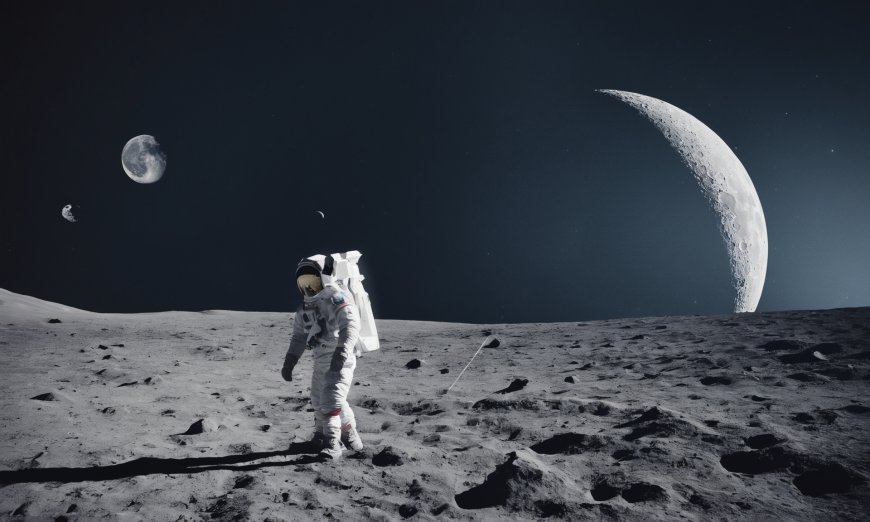
The Apollo 11 mission on July 20, 1969, is one of humanity’s greatest achievements. Millions watched in awe as Neil Armstrong and Buzz Aldrin walked on the lunar surface, marking a monumental step in space exploration. But not everyone was convinced. Over the decades, a persistent conspiracy theory has taken root: what if the Moon landing was a carefully orchestrated hoax? From claims of fake footage to allegations of political motives, the theory that the Moon landing never happened continues to intrigue skeptics and conspiracy theorists alike. Let’s examine the arguments, evidence, and counterarguments surrounding this controversial topic.
 Sly Puzzle Games


Origins of the Moon Landing Hoax Theory
The theory gained traction in the 1970s, fueled by growing distrust in governments after events like the Vietnam War and Watergate scandal. In 1976, Bill Kaysing, a former technical writer for a NASA contractor, published We Never Went to the Moon: America's Thirty Billion Dollar Swindle, which outlined alleged inconsistencies in the Moon landing story. His book became the foundation for many of the claims that persist today.
Key Claims of the Hoax Theory
1. The Van Allen Radiation Belts
Critics argue that astronauts would have been exposed to deadly radiation while passing through the Van Allen belts, which encircle Earth.
- Theory: The radiation levels would have been lethal without advanced shielding, which NASA allegedly didn’t have in 1969.
- Counterargument: NASA maintains that the Apollo spacecraft passed through the belts quickly, minimizing exposure. Dosimeters onboard showed radiation levels well within safe limits.
2. Suspicious Photos and Videos
Conspiracy theorists claim that the footage and images from the Moon landing show signs of being staged on a film set.
- Examples:
- The American flag appears to flutter, despite the lack of wind on the Moon.
- No stars are visible in the lunar sky.
- Shadows cast by objects appear inconsistent, suggesting multiple light sources.
- Counterargument: NASA explains these anomalies:
- The flag fluttered because of movement during its setup.
- The lack of stars is due to the camera’s exposure settings.
- Shadows are distorted by the uneven lunar surface and a single light source (the Sun).
3. The “Perfect” Timing
Skeptics argue that the U.S. faked the Moon landing to win the Space Race against the Soviet Union.
- Theory: The landing was a political stunt designed to demonstrate U.S. superiority during the Cold War.
- Counterargument: The Soviets closely monitored the Apollo missions and had the capability to expose a hoax. Their silence and acknowledgment of the mission lend credibility to the Moon landing.
4. Filmed on a Soundstage
A popular claim is that famed director Stanley Kubrick, fresh off his work on 2001: A Space Odyssey, was hired to create the Moon landing footage.
- Theory: Kubrick’s expertise in special effects made him the ideal candidate for faking the footage.
- Counterargument: While intriguing, no credible evidence supports this claim. Kubrick himself denied any involvement.
5. Inconsistent Technology
Critics argue that the technology of the 1960s was insufficient for a successful Moon landing and return.
- Theory: NASA struggled with numerous failed missions before Apollo 11, making its sudden success suspicious.
- Counterargument: The Apollo program involved years of rigorous testing, innovation, and the collaboration of thousands of engineers and scientists.
Evidence Supporting the Moon Landing
Despite the hoax claims, substantial evidence supports the authenticity of the Moon landing:
- Lunar Samples: Over 800 pounds of Moon rocks were brought back and analyzed by scientists worldwide, confirming their extraterrestrial origin.
- Independent Verification: Observatories and amateur radio operators tracked Apollo’s transmissions, verifying the spacecraft’s location.
- Retroreflectors: Apollo missions placed retroreflectors on the Moon’s surface, which are still used today for laser ranging experiments.
Why Do People Believe the Hoax?
Psychologists suggest that conspiracy theories often gain traction because they provide simple explanations for complex events. The Moon landing’s immense scale, combined with the secrecy surrounding NASA’s operations, creates fertile ground for doubt.
Additionally, mistrust in institutions and sensationalized media coverage keep these theories alive.
Interesting Fact
Did you know that in 2002, Apollo 11 astronaut Buzz Aldrin punched a conspiracy theorist who accused him of faking the Moon landing? Aldrin, who was 72 at the time, said he felt compelled to defend the truth of his experience.
Conclusion
The Moon landing hoax theory persists, not because of credible evidence, but because of humanity’s fascination with questioning the extraordinary. While skeptics may continue to find perceived inconsistencies, the overwhelming scientific and historical evidence supports the authenticity of the Apollo missions.
Whether you see the Moon landing as humanity’s greatest triumph or question its validity, the debate highlights our enduring curiosity about space and the lengths we’ll go to seek the truth.