

Stanley Kubrick’s The Shining: Mysteries Hidden in Plain Sight
Stanley Kubrick’s The Shining (1980) has puzzled, intrigued, and haunted audiences for decades. This adaptation of Stephen King’s novel goes beyond traditional horror, weaving in complex themes and layers of symbolism that invite endless theories and interpretations. From the layout of the Overlook Hotel to Danny’s cryptic visions, The Shining is full of mysteries that seem hidden in plain sight, suggesting that Kubrick’s film is as much a psychological puzzle as it is a ghost story.
 Sly Puzzle Games
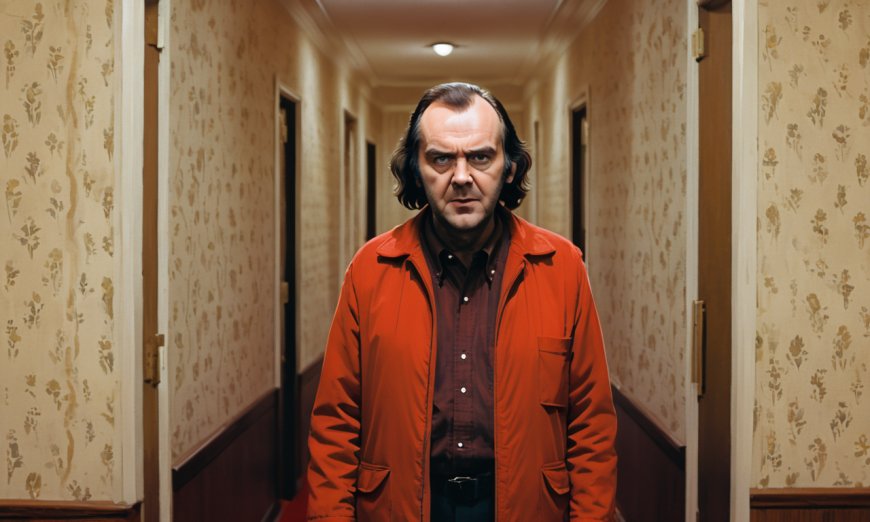


Let’s dive into some of the most fascinating mysteries and hidden meanings in The Shining, exploring what they might reveal about Kubrick’s intentions and the film’s deeper layers.
1. The Overlook Hotel as a Labyrinth
One of the film’s most striking features is the Overlook Hotel’s confusing and seemingly impossible layout. The hotel appears to defy logic, with hallways that lead nowhere, rooms with impossible windows, and corridors that seem to loop. Kubrick’s choice to create a labyrinthine space reflects the psychological maze that Jack Torrance and his family are trapped in. The disorienting design of the hotel intensifies the feeling of claustrophobia and unease, creating an environment where reality itself seems unstable.
The maze outside the hotel is a physical manifestation of this theme, and Jack’s pursuit of Danny through it symbolizes his descent into madness and entrapment within his own mind. Kubrick uses the maze to blur the lines between sanity and insanity, reality and illusion, suggesting that once you enter the Overlook, you may never truly escape.
2. The Mystery of Room 237
Room 237 is one of The Shining’s most enduring mysteries. This room, forbidden and ominous, becomes a focal point for both Danny’s terror and Jack’s obsession. While Stephen King’s novel mentions a different room number, Kubrick specifically chose 237, leading to speculation about its significance. Some fans believe Room 237 represents Jack’s repressed trauma or inner darkness, symbolizing his inability to confront his demons directly.
Other theories suggest Room 237 is a metaphor for hidden truths and forbidden knowledge, drawing viewers into the unknown. The horrific imagery inside the room — a young woman who transforms into an elderly, decaying figure — could symbolize Jack’s corrupted desires or his relationship with the past, hinting at deeper, disturbing memories he has tried to bury. Room 237 remains a chilling enigma, and Kubrick’s reluctance to provide clear answers only deepens its sense of mystery.
3. The Symbolism of Mirrors and Reflections
Throughout The Shining, mirrors and reflections play a prominent role, often revealing a character’s dark side or a deeper truth about the Overlook. Jack’s encounter in Room 237 is seen through a mirror, suggesting that what he experiences may be a projection of his own inner turmoil. The mirror in the Torrance’s room also shows Jack talking to “himself,” implying that his descent into madness may be fueled by his own subconscious desires rather than external forces.
Mirrors serve as gateways to alternate realities in The Shining, blurring the line between fantasy and reality. For Danny, mirrors represent his psychic ability to “shine,” allowing him to see visions of the past, future, and hidden horrors within the hotel. The repeated use of mirrors throughout the film suggests that the Overlook Hotel is itself a mirror — one that reflects and amplifies the inner darkness of those who stay there.
4. The Numbers and Hidden Patterns in The Shining
Kubrick was known for his meticulous attention to detail, and The Shining is filled with recurring numbers, shapes, and patterns that add to its sense of unease. For example, the number 42 appears frequently, from the film’s runtime to certain objects within scenes. Some theorists link this number to World War II and the Holocaust, suggesting Kubrick may be alluding to humanity’s darker history and the violence that seems to linger within the walls of the Overlook.
The film’s use of geometric patterns, particularly in the carpet and wallpaper, creates a surreal, hypnotic effect. The hexagonal patterns on the carpet seem to change direction depending on the shot, adding to the film’s disorienting effect. These subtle, seemingly random details invite viewers to question reality, making it unclear if they are experiencing the hotel’s true layout or an illusion. Kubrick’s use of patterns reinforces the Overlook’s role as a place where perception and reality are constantly shifting.
5. The Ambiguous Character of Jack Torrance
Jack Torrance’s descent into madness is one of the film’s central mysteries. While he is influenced by the supernatural forces of the hotel, there is a question of whether Jack’s madness is a product of the Overlook or an expression of his own suppressed rage and resentment. Jack’s troubled past, hinted at throughout the film, suggests that he may have arrived at the Overlook already predisposed to violence and instability.
Kubrick’s portrayal of Jack blurs the line between the supernatural and the psychological, making it unclear if he is simply succumbing to his inner demons or if he is genuinely being possessed by the Overlook’s dark forces. This ambiguity invites viewers to consider the film as a psychological thriller rather than a straightforward horror movie, posing questions about the nature of evil and whether it comes from within or is imposed by external forces.
6. The Final Photograph: Jack’s Place in the Overlook’s History
The film’s final shot — a photograph from 1921 that appears to show Jack Torrance among the hotel’s guests — has sparked endless debate. This haunting image raises the question of whether Jack was always “meant” to be at the Overlook or if he has somehow become a part of its dark legacy. Some fans interpret this as an indication that Jack’s spirit has been absorbed into the hotel, becoming one of its many “permanent” residents.
The photograph suggests that time within the Overlook is cyclical, trapping individuals in an endless loop. This idea aligns with the notion that certain places can retain memories, replaying events and trapping those who succumb to its power. Kubrick’s choice to end the film on this ambiguous note reinforces the idea that the Overlook is more than just a hotel; it’s a timeless entity that draws people into its dark history.
Interesting Fact
Did you know that Kubrick changed many elements from Stephen King’s novel, including the infamous Room 237? King’s original room was 217, but Kubrick opted to use 237, allegedly to respect the real-life Timberline Lodge, which didn’t want guests to be afraid of staying in its Room 217. This change has since become one of the film’s most discussed mysteries.
Conclusion
Stanley Kubrick’s The Shining is a masterclass in atmospheric horror, blending psychological tension with supernatural elements to create a film that has captivated and confused audiences for decades. The hidden mysteries and unanswered questions that permeate the film — from Room 237 to the final photograph — invite viewers to interpret and re-interpret its meaning, keeping The Shining a topic of discussion long after the credits roll.
Rather than providing clear answers, Kubrick uses The Shining to explore the mysteries of the human mind, the nature of evil, and the ways in which certain places seem to echo with dark histories. In doing so, he crafted a cinematic enigma that continues to haunt, intrigue, and challenge audiences, reminding us that sometimes the most powerful horror lies in the unknown.