

The New World Order: Global Domination or Paranoid Fantasy?
An overview of conspiracy theories about the New World Order and secret plans for global control.
 Sly Puzzle Games
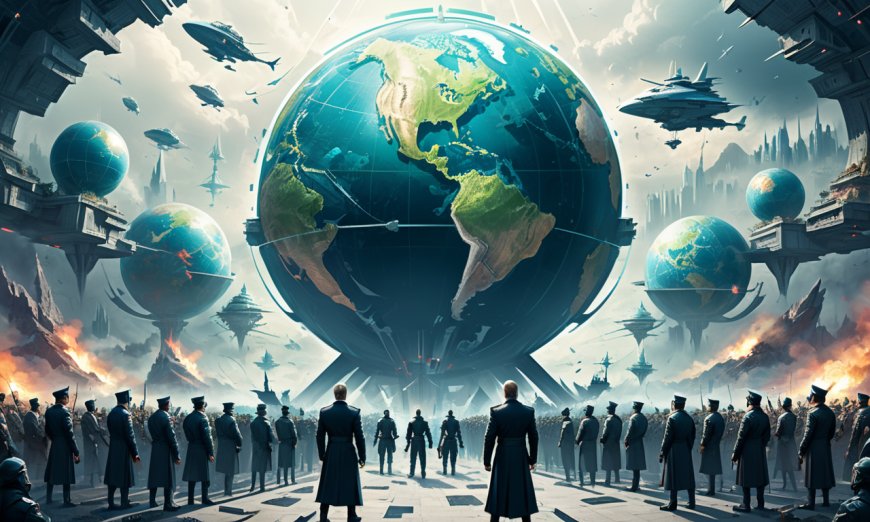


The phrase "New World Order" (NWO) has long been associated with various conspiracy theories that propose the existence of a secretive, powerful group aiming to control world affairs and establish a single global government. These theories suggest that influential elites are orchestrating major political and economic events to achieve this objective. But is the New World Order a genuine threat or merely a product of paranoid fantasy? Let’s delve into the origins, key elements, and criticisms of NWO theories.
Origins of the New World Order Theories
The concept of the New World Order gained prominence in the 20th century, particularly during periods of significant geopolitical change:
- Post-World War I and II Context
After both World Wars, global leaders emphasized the need for international cooperation to prevent future conflicts. The establishment of the League of Nations and later the United Nations sparked concerns among some groups about the potential for global governance and loss of national sovereignty.
- Cold War Era
During the Cold War, fears of communist expansion and the potential for a single superpower to dominate the world fueled New World Order theories. Anti-communist sentiment often intertwined with these ideas, suggesting a hidden agenda behind international organizations.
- Modern Usage
The term "New World Order" was famously used by President George H.W. Bush in a 1990 speech following the end of the Cold War, where he called for a world where diverse nations are united in common cause. This reference reignited suspicions among conspiracy theorists about hidden global agendas.
Key Elements of New World Order Theories
Several recurring themes and elements characterize New World Order theories:
- Secret Societies and Elite Groups
NWO theories often involve clandestine organizations such as the Illuminati, Freemasons, and Bilderberg Group. These groups are believed to wield significant influence over world affairs and collaborate to implement their agenda.
- Global Institutions
Theories frequently cite international bodies like the United Nations, the World Bank, and the International Monetary Fund as tools used by the elite to impose global control. These institutions are seen as mechanisms to undermine national sovereignty and enforce a centralized authority.
- Surveillance and Control
A common theme is the implementation of advanced surveillance technologies and invasive policies to monitor and control populations. This includes concerns about microchipping, digital currencies, and mass data collection.
- Economic Manipulation
NWO proponents argue that global financial systems are manipulated to create economic crises, which are then used to justify increased control and consolidation of power. The 2008 financial crisis, for instance, is often cited as an example of such manipulation.
Criticisms and Debunking
While New World Order theories have a dedicated following, they are widely criticized and debunked by scholars, journalists, and analysts:
- Lack of Concrete Evidence
One of the primary criticisms is the lack of concrete evidence to support the existence of a coordinated global conspiracy. Many of the claims rely on circumstantial evidence, misinterpretations, and speculative connections.
- Psychological and Sociological Explanations
Experts suggest that NWO theories fulfill psychological and sociological needs for understanding complex global events. They provide simple explanations for intricate political and economic phenomena, often appealing to individuals feeling disempowered or distrustful of authority.
- Historical Misinterpretations
Many historical events cited by NWO theorists are reinterpreted or taken out of context to fit the narrative. For instance, references to secret societies often misrepresent the actual influence and activities of these groups.
The Role of Media and Internet
The proliferation of the internet and social media has played a significant role in spreading and sustaining New World Order theories:
- Echo Chambers
Online platforms can create echo chambers where individuals are exposed only to information that reinforces their beliefs. This can intensify conspiracy thinking and make it more resistant to counter-evidence.
- Viral Misinformation
Misinformation and conspiracy theories can spread rapidly online, often reaching large audiences before they can be fact-checked or debunked. This has led to the mainstreaming of previously fringe ideas.
A Little Fun Fact
Oh, and by the way, did you know that many popular culture references to the New World Order, including in movies and TV shows, often draw directly from conspiracy theories, further blurring the lines between fiction and perceived reality?
Conclusion
The New World Order remains one of the most enduring and controversial conspiracy theories, blending elements of historical suspicion, contemporary political concerns, and technological anxieties. While these theories offer intriguing narratives, they often lack substantive evidence and can distract from more tangible and immediate global issues. Critical thinking and a reliance on verified information are essential when navigating the complex landscape of modern conspiracy theories.
And if you love solving mysteries and exploring historical enigmas, don’t forget to check out our word puzzle game, Sly Puzzle Games. It's a great way to keep your brain sharp and entertained. Happy exploring!