

The Mandela Effect: Are We Living in a Parallel Universe?
Have you ever been absolutely sure of a fact, only to find out later you were wrong? For example, do you remember the Berenstain Bears spelled as “Berenstein Bears”? Or that Darth Vader said, “Luke, I am your father”? If so, you’ve encountered what’s known as the Mandela Effect — a phenomenon where a large group of people shares the same false memory. The Mandela Effect is more than a quirky coincidence. Some believe it’s evidence of alternate realities, parallel universes, or glitches in the fabric of our existence. Let’s explore what the Mandela Effect is, the theories behind it, and whether it could truly point to the existence of parallel universes.
 Sly Puzzle Games



What Is the Mandela Effect?
The term was coined by Fiona Broome, a paranormal researcher, who noticed she and many others remembered Nelson Mandela dying in prison in the 1980s. In reality, Mandela was released in 1990 and lived until 2013. This collective false memory led Broome to theorize that these discrepancies might be the result of overlapping realities.
The Mandela Effect has since been used to describe countless instances where large groups of people recall events, names, or details differently from recorded history.
Famous Examples of the Mandela Effect
1. The Berenstain Bears vs. Berenstein Bears
Millions of people distinctly remember the popular children’s book series as "Berenstein Bears," but the books have always been spelled "Berenstain Bears."
2. Darth Vader’s Famous Line
Fans swear Darth Vader says, “Luke, I am your father,” in Star Wars: The Empire Strikes Back. In reality, the line is, “No, I am your father.”
3. The Monopoly Man’s Monocle
Many people remember the Monopoly mascot having a monocle. However, he never wore one.
4. The “Fruit of the Loom” Logo
Does the Fruit of the Loom logo feature a cornucopia behind the fruit? Many say yes, but the logo never had a cornucopia.
5. “Mirror, Mirror on the Wall”
In Snow White and the Seven Dwarfs, the line most of us remember as “Mirror, mirror on the wall” is actually “Magic mirror on the wall.”
The Theories Behind the Mandela Effect
1. Parallel Universes
One of the most popular theories is that the Mandela Effect is evidence of parallel universes colliding or overlapping. According to this idea, some people’s memories align with an alternate reality where the events occurred differently.
- Supporters Claim: Shifts in quantum physics or dimensional overlaps might occasionally “spill over,” leading to changes in memory.
2. False Memories
Psychologists often explain the Mandela Effect as the result of false memories. These occur when the brain reconstructs information inaccurately, influenced by suggestion, misinformation, or social reinforcement.
- Example: If enough people claim the Monopoly man has a monocle, your brain might create a memory of it, even if you’ve never seen it.
3. Time Travel
Another theory posits that time travelers could have made small changes in the past, causing subtle shifts in reality. These alterations might explain why collective memories don’t match recorded history.
- Speculation: Could someone have gone back in time and accidentally altered the Fruit of the Loom logo or the Berenstain Bears spelling?
4. Glitches in the Matrix
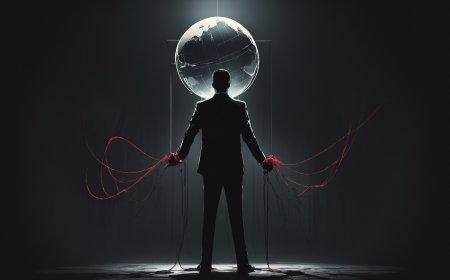
Fans of simulation theory suggest that the Mandela Effect is proof we’re living in a computer simulation. According to this idea, discrepancies arise when the system is updated or experiences errors.
Why Do So Many People Share the Same False Memories?
- Social Reinforcement: When a false memory is repeated by many people, it becomes easier to adopt as “true.”
- Cognitive Biases: Human memory is malleable and influenced by expectations, cultural references, and personal associations.
- Information Spread: The internet amplifies collective false memories, making it easier for them to gain traction.
Real-Life Implications of the Mandela Effect
The Mandela Effect highlights the fragility of human memory and how easily it can be influenced. It also challenges our understanding of reality and raises questions about the nature of existence:
- Could our memories be unreliable, or are they evidence of something greater, like alternate dimensions or a simulated reality?
- What does the Mandela Effect say about the nature of truth and how we perceive the world around us?
Interesting Fact
Did you know researchers have found that false memories can be implanted in up to 70% of people through suggestion alone? This phenomenon is called memory conformity and offers a scientific basis for many Mandela Effect examples.
Conclusion
The Mandela Effect blurs the line between science and speculation, fact and fantasy. Whether it’s a quirk of human memory, evidence of parallel universes, or a glitch in the simulation, one thing is clear: the phenomenon continues to intrigue and mystify people worldwide.
While science may lean toward false memories as the explanation, the allure of alternate realities and time travel keeps the Mandela Effect alive in popular culture. Could this be a glimpse into a larger, more mysterious truth about our existence? The answer remains as elusive as the memories themselves.